Stainless vs Copper Benchtop: Which Metal Suits Your Kitchen?
Stainless steel and copper are the two metals most often shortlisted for a custom benchtop, and they behave very differently in a working kitchen. One is engineered to stay exactly as delivered; the other is designed to change. Choosing between them is less about which metal is "better" and more about how much movement in appearance you want to live with, and how the surface will be used day to day.
This comparison is based on benchtops we fabricate and install from our Wollongong workshop for residential kitchens, bars and hospitality fit-outs across the Illawarra and Sydney.
Quick comparison
| Consideration | Stainless steel | Copper |
|---|---|---|
| Appearance over time | Stable — stays as installed | Develops a living patina, rose to brown to verdigris |
| Hygiene | Non-porous, naturally antibacterial, food-safe | Non-porous and antimicrobial, but reactive to acids |
| Heat resistance | Excellent — hot pans will not damage it | Excellent, though heat can shift the patina locally |
| Scratching | Marks show, but blend into the grain over time | Marks blend quickly into the patina |
| Acid and citrus | Unaffected | Etches immediately; leaves bright marks |
| Maintenance | Wipe with warm water along the grain | Wipe dry after every use; wax or lacquer optional |
| Typical use | Kitchens, islands, laundries, outdoor BBQ areas | Bar tops, feature islands, splashbacks, hoods |
| Relative cost | Lower material cost per square metre | Higher material cost; thicker sheet required |
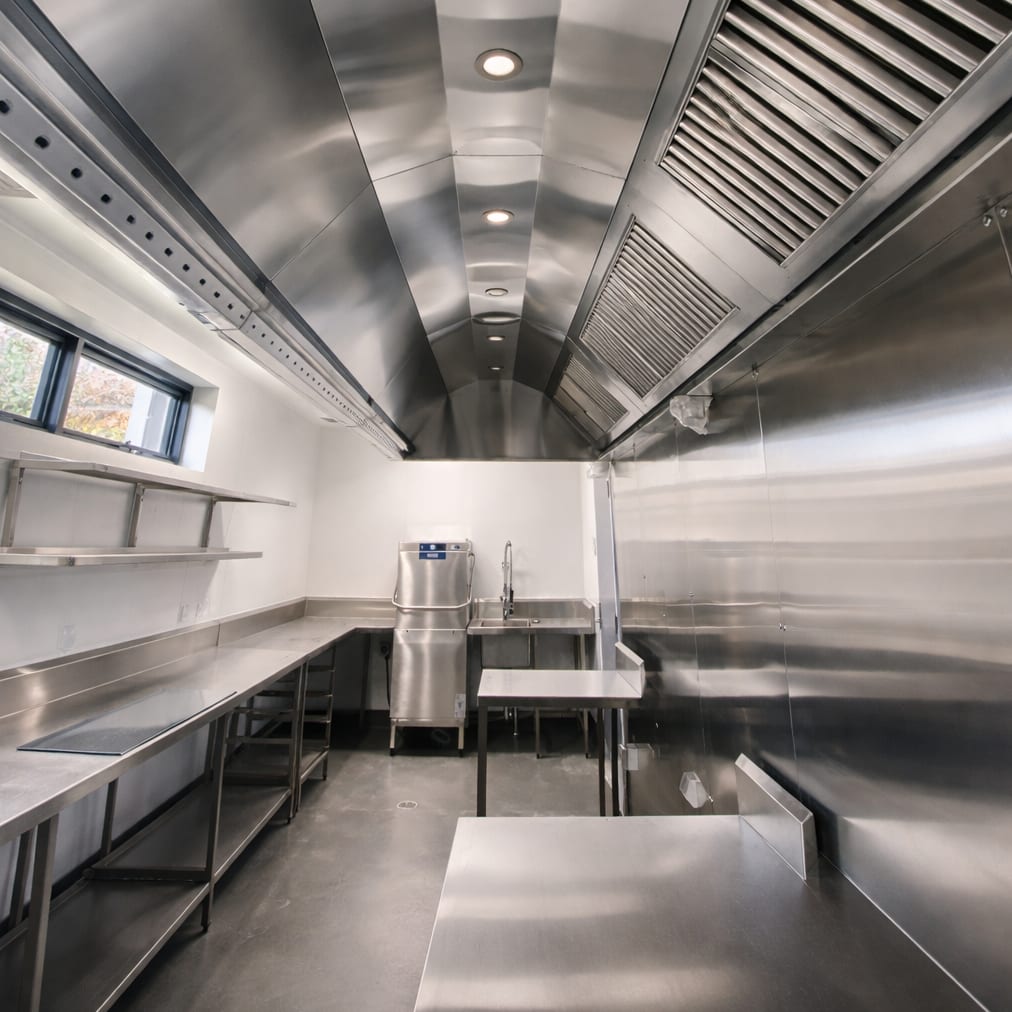
Stainless steel: the stable, working surface
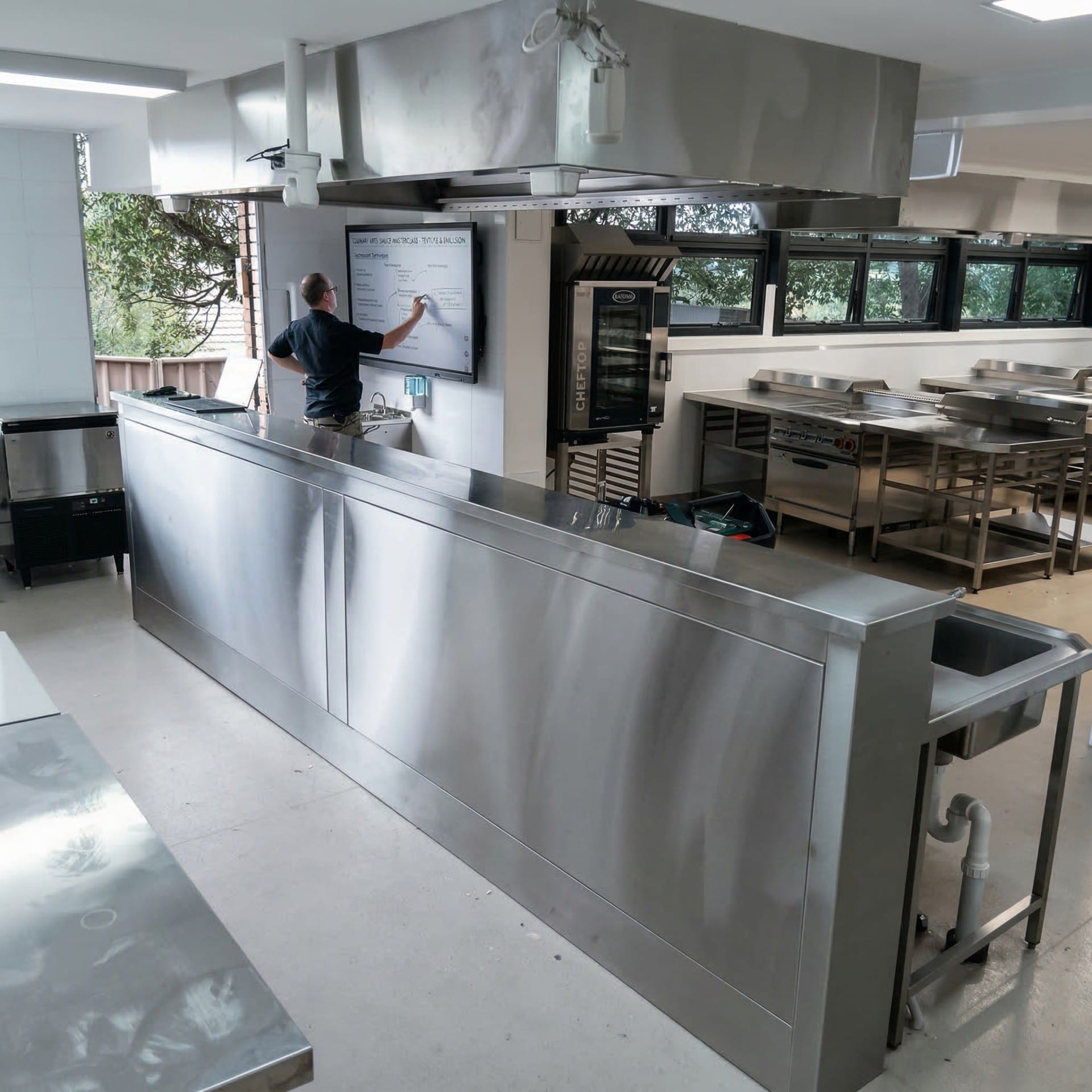
Stainless steel is the default for anyone who wants a benchtop that performs like a professional kitchen surface. It is non-porous, so it cannot absorb liquid, oil or bacteria. It is unaffected by lemon juice, red wine, vinegar or hot cookware, and it can be cleaned with nothing more than warm water and a soft cloth.
Grade selection matters more than most homeowners realise. Grade 304 is correct for the overwhelming majority of indoor kitchens. Grade 316 contains molybdenum, which substantially improves resistance to chlorides — the right choice for coastal properties, outdoor kitchens and BBQ areas, and commercial kitchens where chemical cleaning is routine. We cover the difference in detail in our 304 vs 316 stainless steel guide.
The honest downside is that stainless shows fingerprints and fine scratches, particularly in the first year. A No. 4 brushed satin finish disguises this far better than a mirror polish, and the surface settles into a consistent working patina as those fine marks accumulate evenly. A benchtop that looks "scratched" at six months usually looks uniform at two years.
Copper: the surface that changes
Copper is chosen for character. Freshly fabricated, it is bright rose-gold. Left unsealed, it darkens through amber and chocolate brown, and in humid or coastal settings will eventually develop green-blue verdigris in sheltered areas. Every glass placed on it, every hand that touches it, contributes to that surface.
Copper is naturally antimicrobial — the metal actively kills bacteria on contact, which is why it appears in healthcare touch surfaces. It is also softer than stainless steel, so it dents more readily and telegraphs the substrate beneath, which is why we specify a heavier gauge and a fully supported substrate on any copper benchtop.
The critical thing to understand before specifying copper for a primary food-preparation bench is its reactivity. Citrus, vinegar, wine and tomato will strip the patina wherever they land, leaving a bright mark that then re-patinates at its own pace. For a bar top, that mottled history is the point. For a family kitchen where someone will inevitably leave a cut lemon on the bench, it can become a source of frustration.
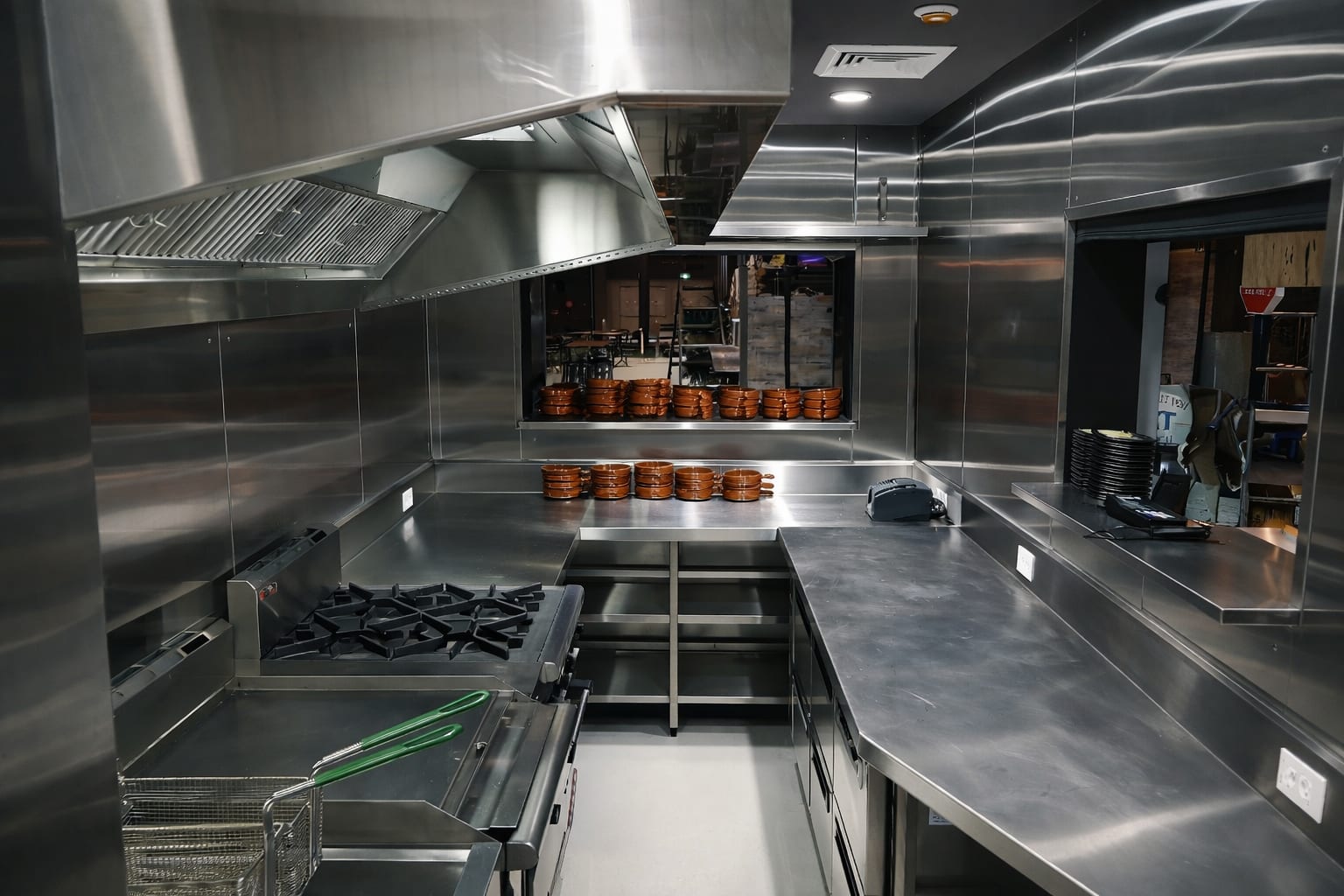
Sealed or unsealed copper
There are two ways to run a copper benchtop. Unsealed, waxed periodically with a microcrystalline wax, it patinates freely and can be brought back or pushed darker with chemical treatment at any time. Lacquered, it holds close to its installed colour, but the lacquer will eventually wear at high-traffic points and cannot be spot-repaired invisibly — it has to be stripped and re-applied.
We generally recommend unsealed and waxed for bar tops and feature pieces, and lacquered only where a client is certain they want the colour frozen.
Cost drivers
Material cost is only part of the picture. Copper sheet costs significantly more per square metre than 304 stainless, and the heavier gauge required increases that gap. Fabrication complexity is comparable — both are folded, welded and hand-finished — although copper's softness demands more careful handling and more hand-finishing time.
For most projects the deciding factor is area. A copper bar top of two or three square metres is a very achievable feature. A full kitchen in copper, including island and returns, is a substantially larger investment than the equivalent in stainless.
A common answer: use both
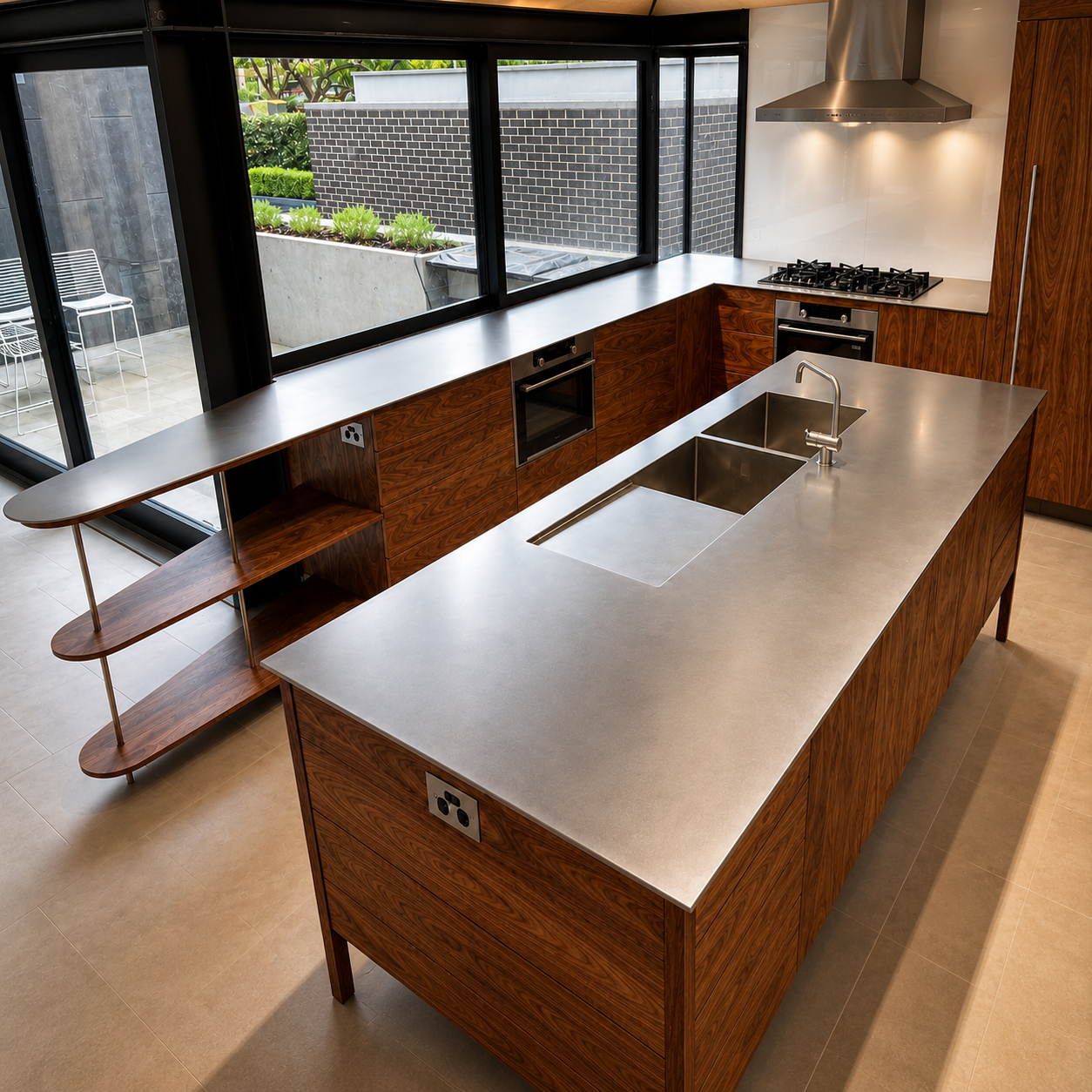
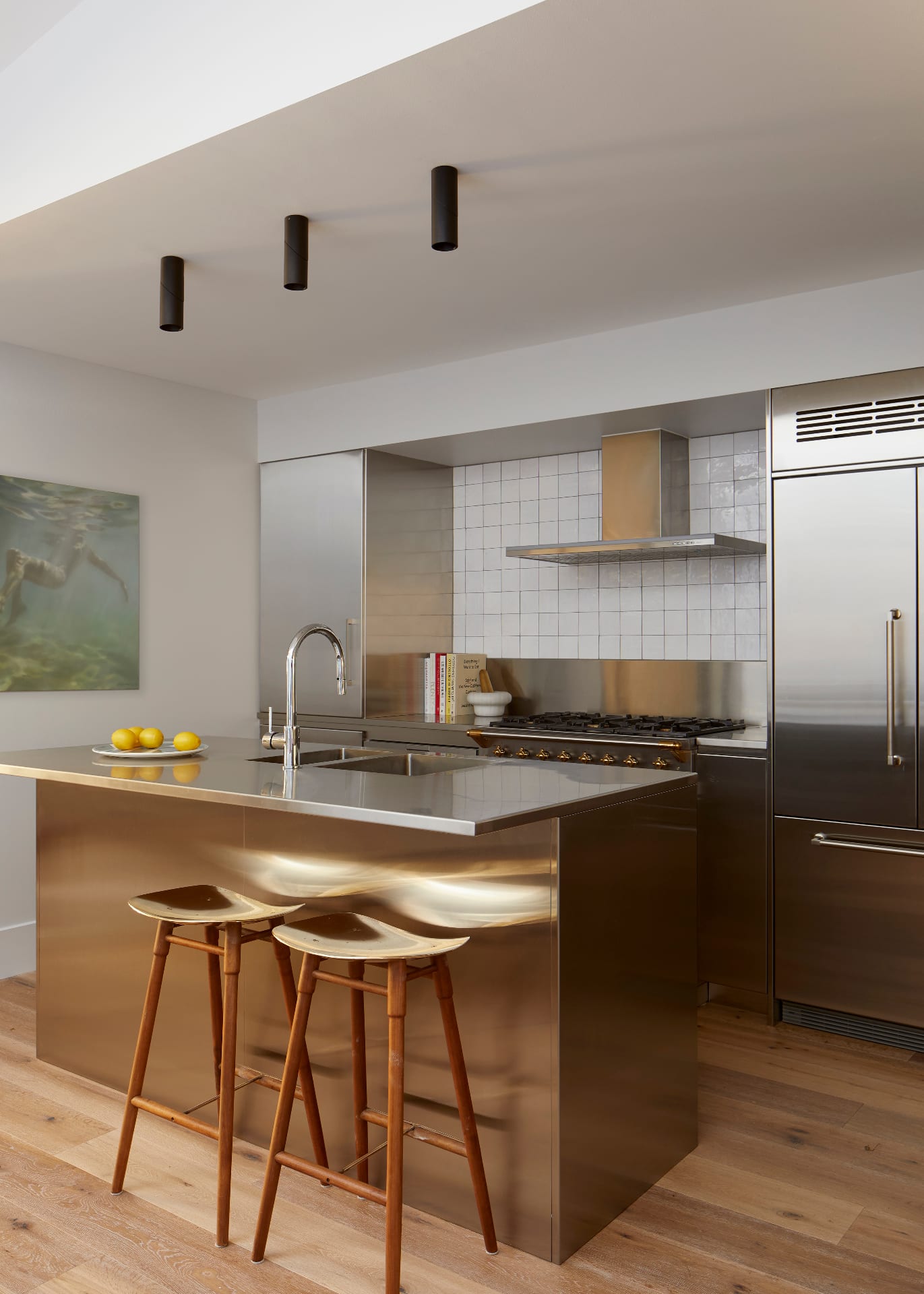
The strongest kitchens we build rarely choose one metal. Stainless steel handles the working surfaces — perimeter benches, sink runs, the island where food is actually prepared — while copper or brass appears on the rangehood, a bar return, a splashback or shelf brackets. The stainless does the work; the copper carries the warmth.
How to decide
Choose stainless steel if the benchtop is a primary work surface, if the kitchen is coastal or outdoors, if hygiene compliance matters, or if you want the surface to look substantially the same in ten years.
Choose copper if the surface is a feature more than a workhorse, if you actively want the patina and its history, and if you are comfortable wiping it dry after use.
Next steps
We fabricate both from our Wollongong workshop and install across the Illawarra, South Coast and Sydney. See our stainless steel benchtops and copper and brass fabrication services, or browse completed work in our portfolio.
We provide physical samples on every project — a finish chosen from a photograph is a finish chosen twice. To discuss a benchtop, call 02 4226 5500 or submit a quote request.
Published by AMSS Group — The region’s leading metal fabrication specialists.