Stainless Steel vs Stone Benchtops: Hygiene, Durability and Cost Compared
Since the engineered-stone ban took effect in Australia, more clients are asking a question they never used to ask: what should a benchtop actually be made of? Stainless steel has moved from a commercial-kitchen default to a serious residential option. Here is how it compares with stone.
The regulatory context
Australia prohibited the manufacture, supply, processing and installation of engineered stone benchtops, panels and slabs from 1 July 2024, following Safe Work Australia's findings on accelerated silicosis among stone workers. Natural stone remains legal, but is subject to tightened crystalline-silica work processes. That change alone has redirected a significant share of benchtop specification toward stainless steel, timber and porcelain.
Hygiene
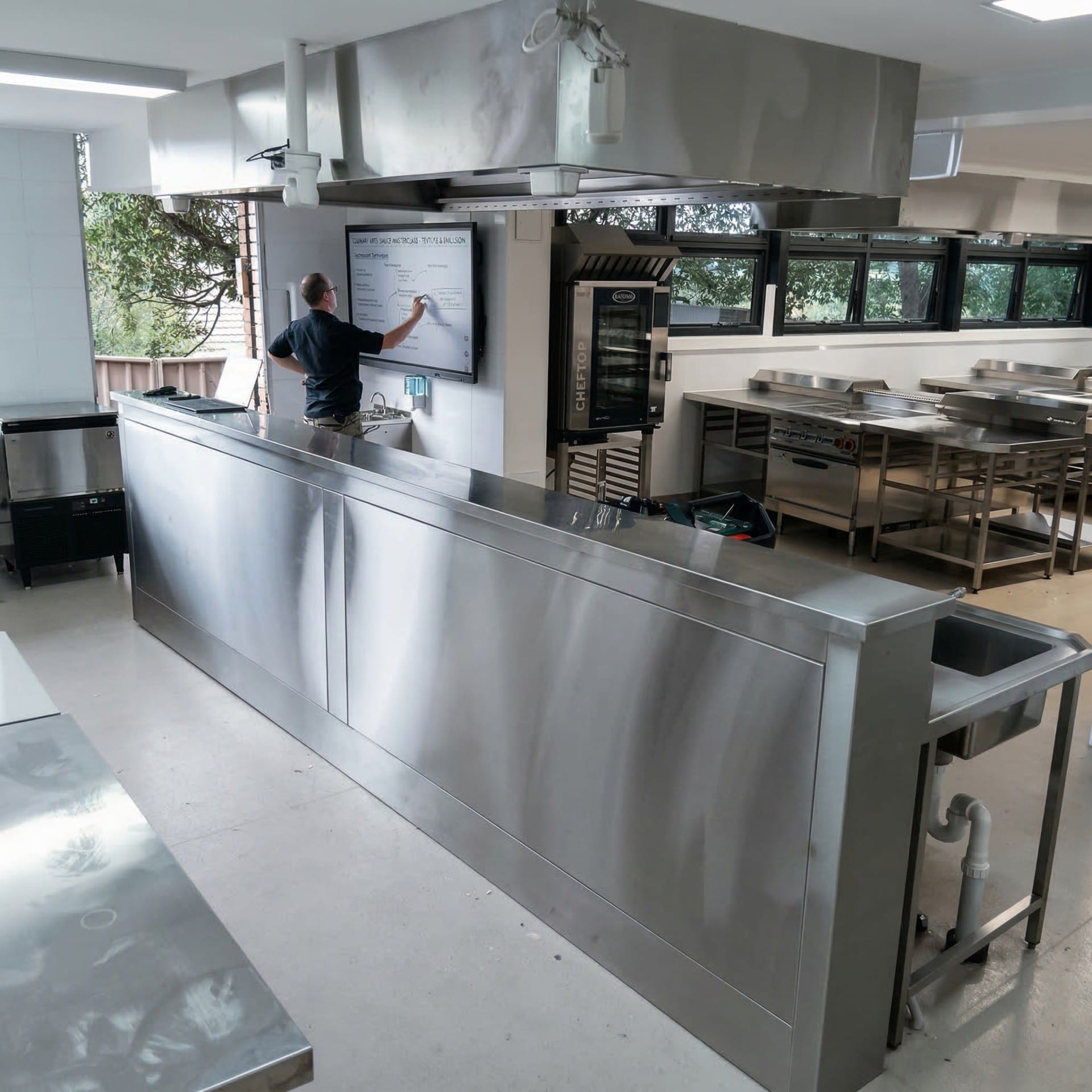
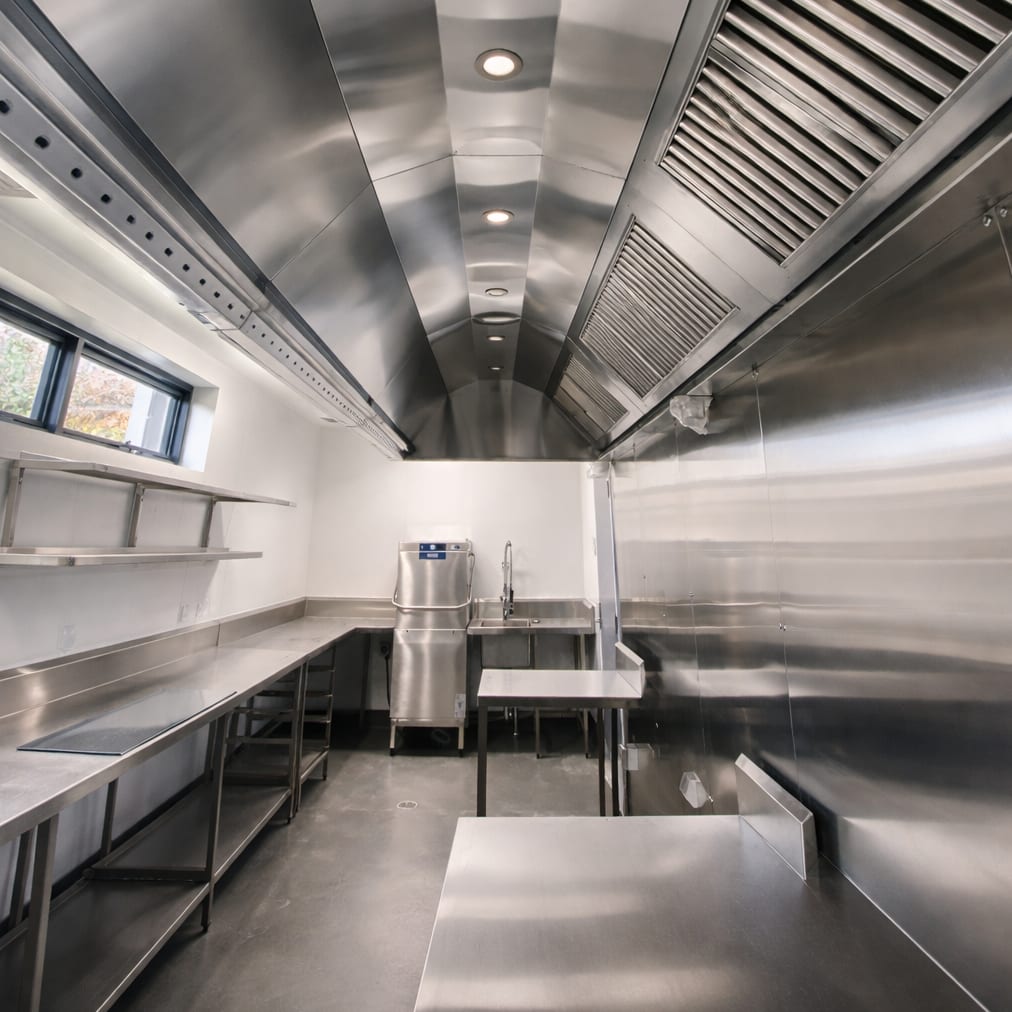
Stainless steel is non-porous. Nothing soaks in, and there is no sealer to fail. It is the reason it is mandated in commercial food premises fabricated to AS 4674, hospitals and laboratories.
Natural stone is porous to varying degrees. Marble and limestone absorb oil and wine readily; granite less so. All require periodic sealing, and a sealer that has quietly worn through is invisible until a stain appears.
Advantage: stainless steel, clearly.
Heat
Set a pan straight off the cooktop onto stainless steel and nothing happens. Do it on engineered stone and the resin can scorch or the slab can crack from thermal shock. Natural granite tolerates heat well; marble tolerates it but can suffer thermal staining.
Advantage: stainless steel.
Stains and acids
Stainless steel is unaffected by citrus, wine, vinegar, turmeric or coffee. Marble etches on contact with anything acidic — a squeezed lemon leaves a dull mark in the polish within minutes. Granite is far more tolerant but still relies on its sealer.
Advantage: stainless steel.
Scratches and appearance over time
This is where stone wins. Polished granite and quartzite resist scratching from ordinary kitchen use. Stainless steel will accumulate fine surface marks, especially in the first twelve months, before settling into an even working patina. A brushed No. 4 finish disguises this far better than a mirror finish.
The important distinction is that stainless marks but does not damage: a scratch is cosmetic and can be blended along the grain. A chip out of a stone edge is permanent.
Advantage: stone for appearance, stainless for repairability.
Fabrication and detailing
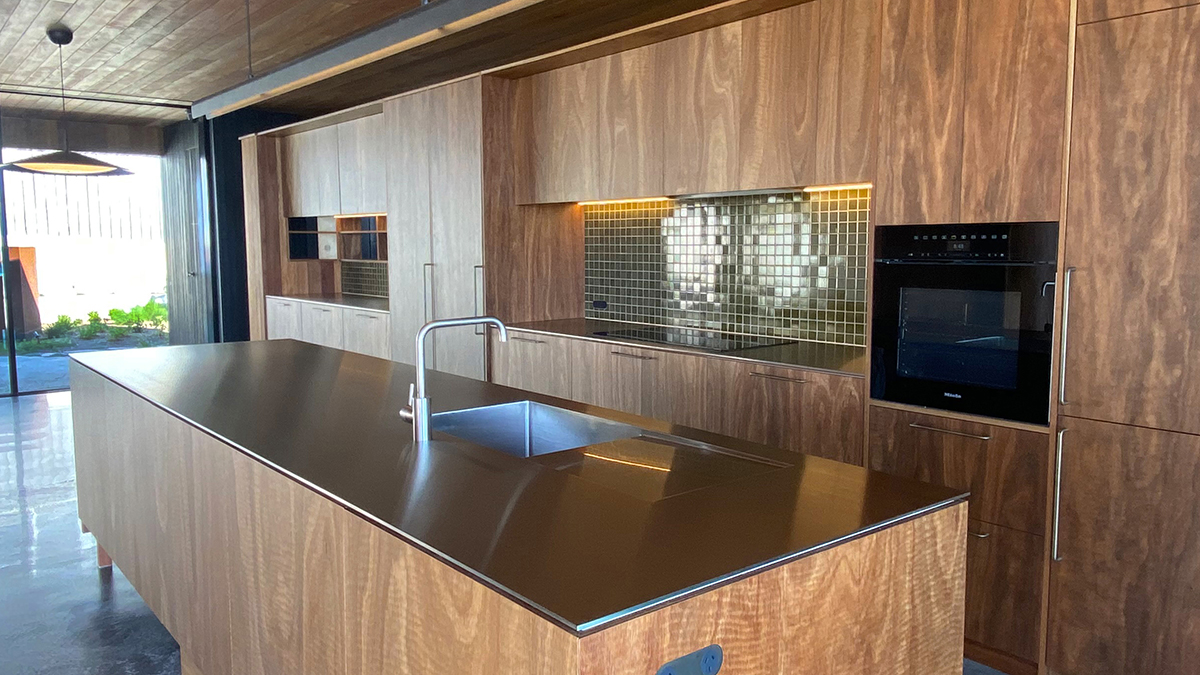
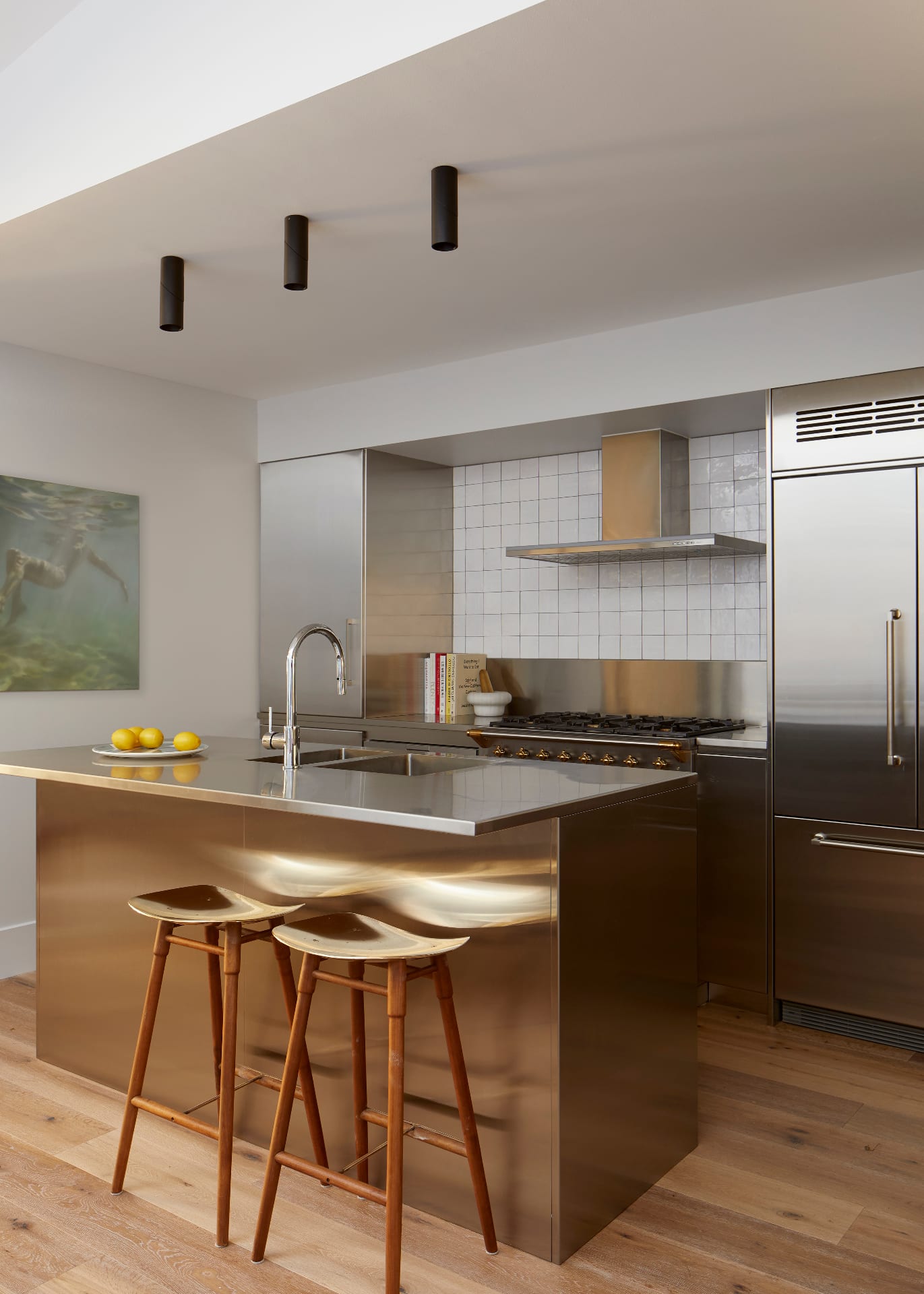
Stainless steel can be folded, welded and dressed into a single continuous surface — a benchtop with an integrated sink, a coved upstand and a seamless return, with no joints for water to find. Stone requires seams on any run longer than a slab, and a separate undermount sink with a silicone joint.
For islands, waterfall ends and complex geometry, stainless can be fabricated to the building as it actually exists, using site templates rather than nominal dimensions.
Advantage: stainless steel.
Weight and structure
A 20 mm stone slab is heavy and often requires substrate reinforcement, particularly on cantilevers and long islands. Stainless benchtops are fabricated as a folded skin over a marine-ply or particleboard substrate, delivering a slim 40 mm apparent thickness at a fraction of the dead load.
Advantage: stainless steel.
Cost
Material for material, mid-range granite and stainless steel are broadly comparable per square metre installed. Premium marble and quartzite sit well above both. The genuine cost differences appear at the extremes: a very simple square stone benchtop is inexpensive, while a complex stainless benchtop with integrated sinks, drainer grooves and coved upstands carries significant hand-fabrication time.
Over a twenty-year horizon, stainless steel has no sealing costs, no re-polishing, and a high salvage value — it is fully recyclable with no loss of properties, which also assists Green Star and NABERS submissions.
Sustainability
Stainless steel is typically produced with a high recycled content and is recycled again at end of life without downgrading. Stone is quarried, heavy to transport, and generally landfilled at end of life.
Advantage: stainless steel.
Where each belongs
Specify stainless steel for serious cooking kitchens, coastal and outdoor kitchens, sink runs and prep zones, laundries, commercial and clinical spaces, and any project where hygiene compliance or heat exposure is a factor.
Specify natural stone where the visual character of the material — the veining, the depth, the mass — is the reason for the choice, and where the kitchen is more a display space than a working one.
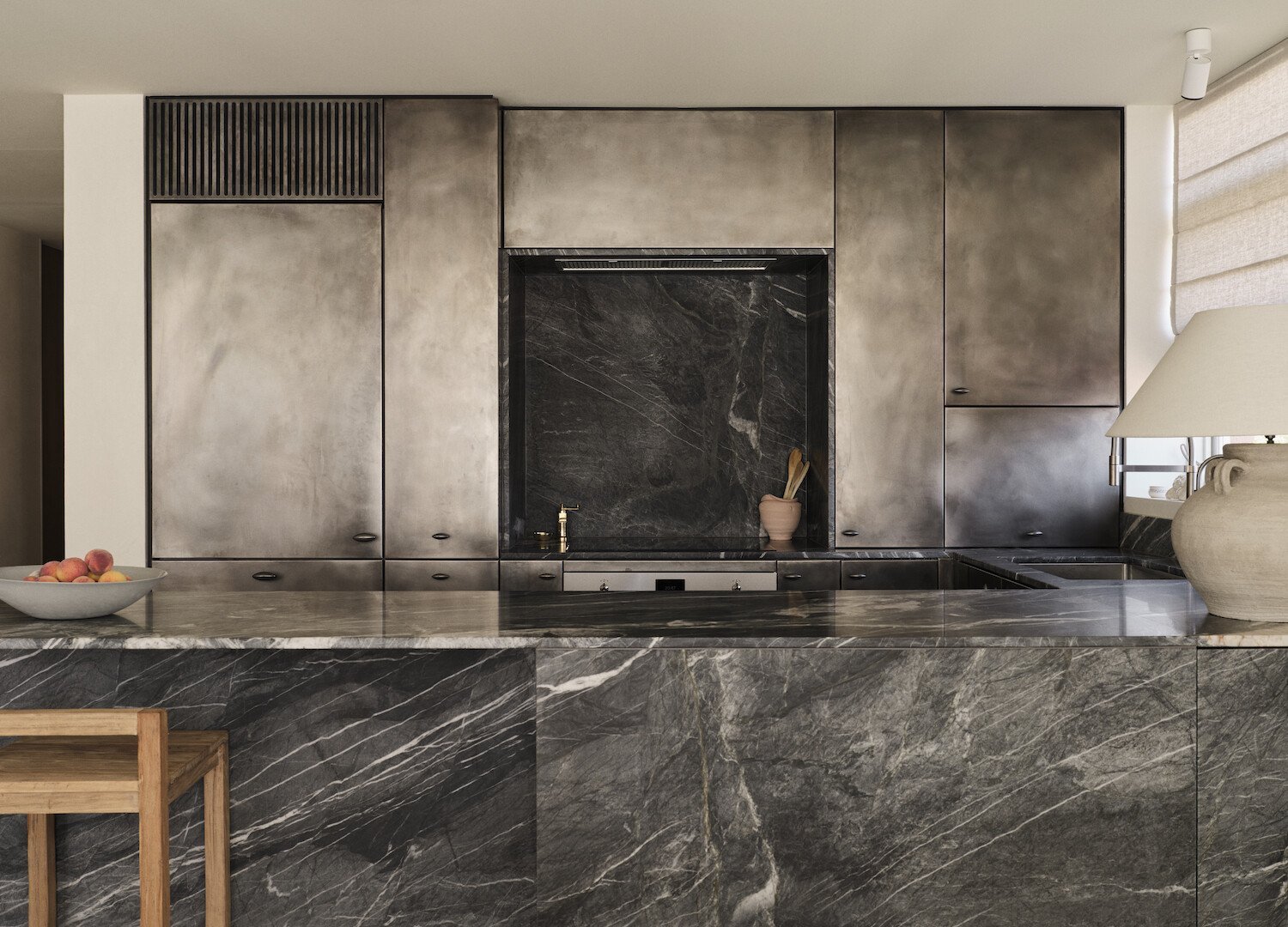
And, as with copper, the two work well together: a stone island as the visual centrepiece with stainless steel on the working perimeter is a combination we fabricate regularly.
Talk to us
We fabricate stainless steel benchtops and full stainless steel fabrication packages from our Wollongong workshop, and install across the Illawarra, South Coast, Southern Highlands and Sydney. See completed benchtops in our portfolio.
Call 02 4226 5500 or submit a quote request with your plans.
Published by AMSS Group — The region’s leading metal fabrication specialists.