How to Maintain a Stainless Steel Benchtop: A Practical Care Guide
A stainless steel benchtop should outlast the kitchen it sits in. The benchtops our team installed in Illawarra homes and commercial kitchens in the 1990s are still in service. Almost every problem we are called out to inspect is caused by the wrong cleaning product rather than the metal itself.
This is the maintenance routine we hand to clients on installation.
Why stainless is "stainless"
Stainless steel resists corrosion because chromium in the alloy reacts with oxygen to form an invisible, self-repairing chromium oxide layer on the surface. That passive layer is the protection. Anything that strips it — chlorides, bleach, abrasive pads, contamination from carbon steel — allows the steel beneath to corrode. Look after the passive layer and the benchtop looks after itself.
Daily cleaning
Warm water, a drop of mild dish soap, and a soft cloth or microfibre. Wipe *along* the grain, never across it. Rinse with clean water and dry with a soft cloth — drying is the step most people skip, and it is what prevents water spotting in hard-water areas.
That is genuinely the entire daily routine. No specialty product is required.
Never use these
Steel wool or wire brushes. They leave carbon steel particles embedded in the surface, which rust within days and look exactly like the benchtop itself is rusting.
Bleach or any chloride-based cleaner. Chlorides attack the passive layer and cause pitting. This includes many bathroom sprays, some oven cleaners, and hypochlorite sanitisers used undiluted.
Abrasive cream cleansers on a satin finish. They cut across the grain and leave a dull halo that is very difficult to blend out.
Hydrochloric acid, sometimes present in tile and grout cleaners. If it lands on stainless, flush with water immediately.
Leaving damp cloths, rubber mats or cast iron pans sitting on the surface. Trapped moisture in an oxygen-starved crevice is the most common cause of localised corrosion on an otherwise healthy benchtop.
Fixing common problems
Coastal and outdoor benchtops
Salt-laden air deposits chlorides on any exposed surface. On outdoor kitchens and BBQ areas within a few kilometres of the coast, rinse the benchtop with fresh water regularly — fortnightly is a reasonable rhythm — and dry it. This is also why we specify grade 316 rather than 304 for coastal and external work; the molybdenum content buys real corrosion resistance, but it does not remove the need to rinse.
Commercial kitchens
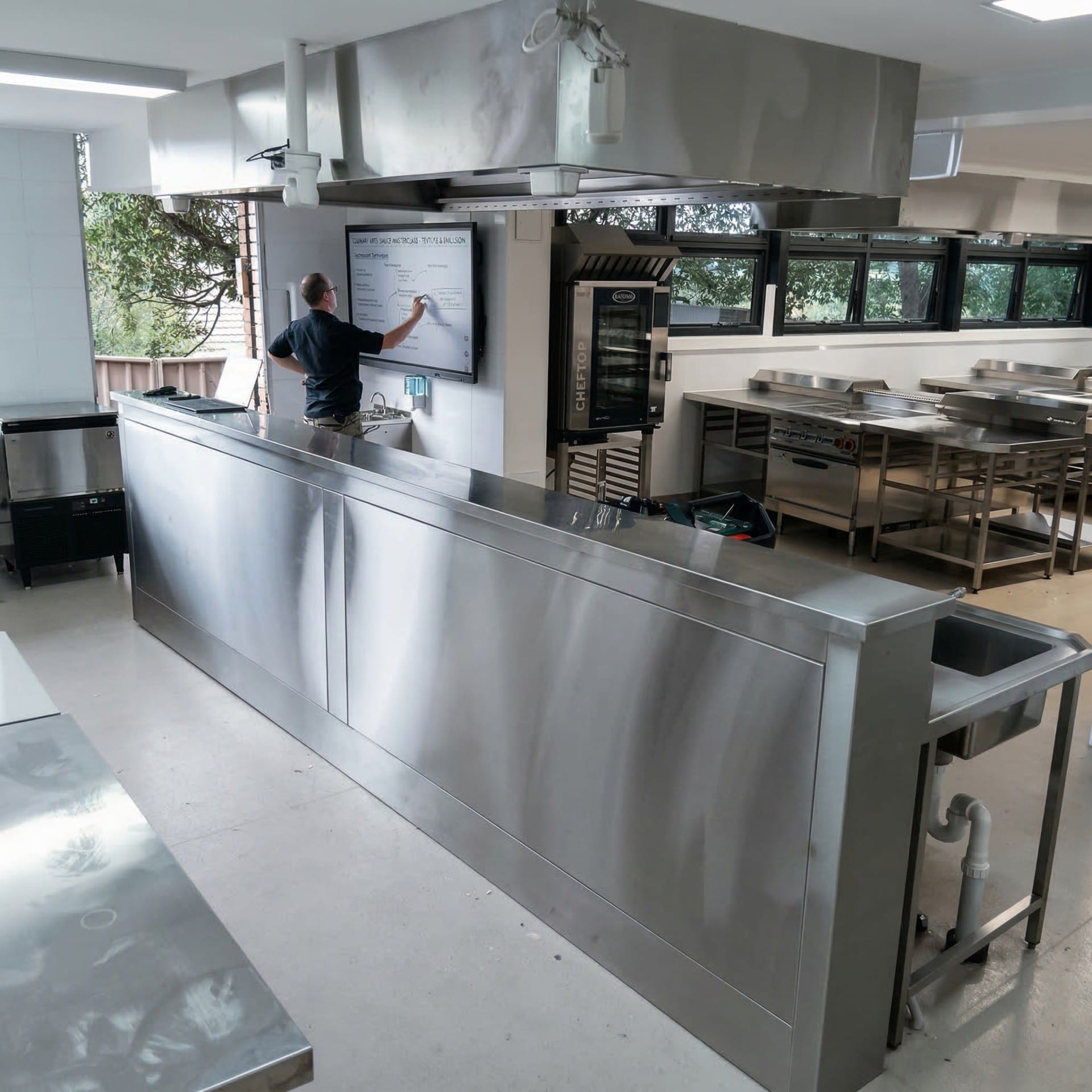
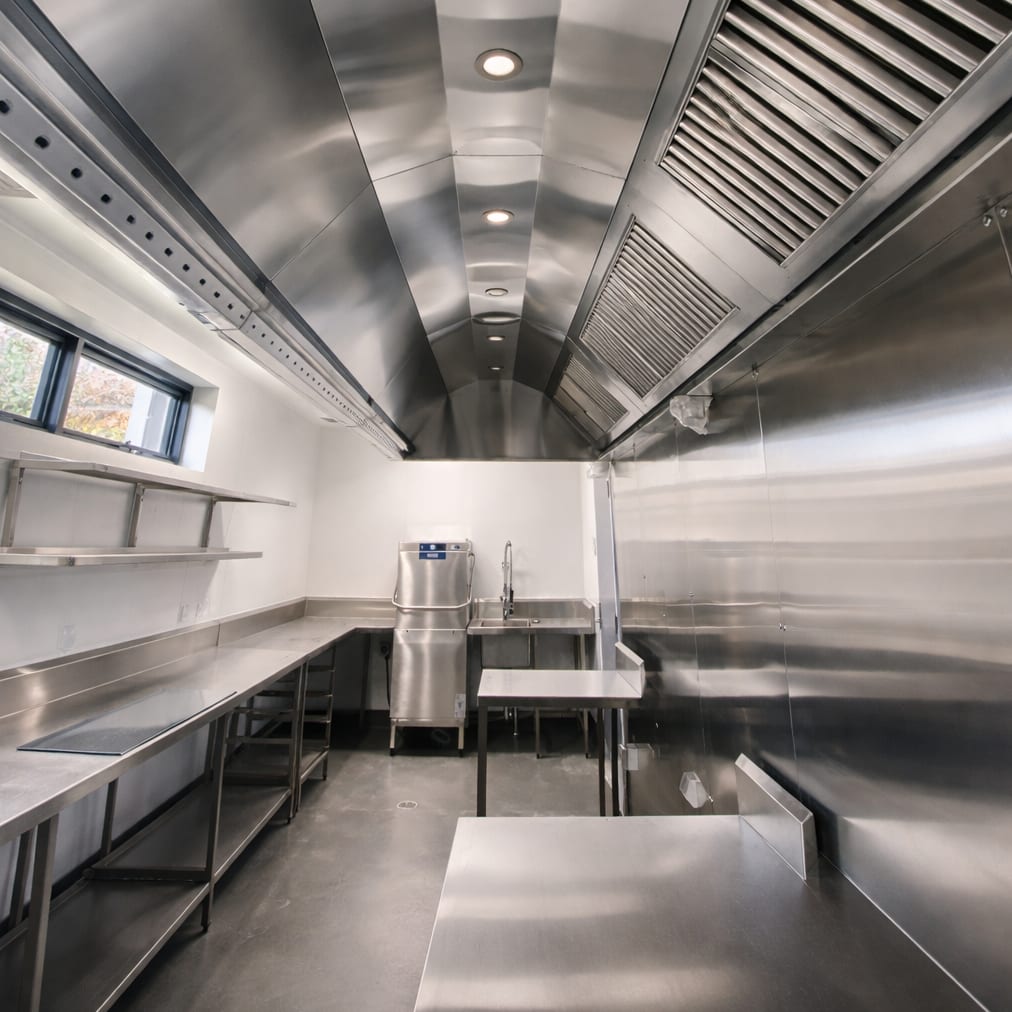
In commercial settings, sanitiser choice is the main risk. Use a quaternary ammonium or peroxide-based sanitiser rather than a hypochlorite one on stainless surfaces, and if a chloride sanitiser must be used, rinse the surface with potable water afterwards rather than letting it air-dry. Benches, shelves and canopies fabricated to AS 4674 are designed to be cleanable — coved corners and sealed penetrations exist so that water and food debris cannot sit in a crevice.
When to call a fabricator
Call us if you see pitting rather than surface spotting, if a weld seam is discolouring, if a sealed joint has opened, or if a surface needs re-graining after years of service. Metal is repairable — a bench that has done twenty years can usually be re-finished on site rather than replaced.
Related services
We fabricate and install stainless steel benchtops, commercial kitchen fabrication and exhaust canopies from our Wollongong workshop, servicing the Illawarra, South Coast and Sydney.
For advice on an existing benchtop or a new one, call 02 4226 5500 or submit a quote request.
Published by AMSS Group — The region’s leading metal fabrication specialists.