How to Clean and Maintain Brass, Copper and Bronze Metalwork
Brass, copper and bronze are living metals. Unlike stainless steel, they are meant to change, and the single most useful decision you can make is whether you want that change or want to hold it back. Everything about maintenance follows from that choice.
This guide covers the finishes we fabricate most often: polished brass handrails, copper bar tops and splashbacks, and bronze hardware and thresholds.
First: is it lacquered?
Unlacquered metal feels slightly warm and matt to the touch and will darken visibly at hand-contact points within weeks. Lacquered metal has a faint plastic sheen, stays bright, and eventually shows wear as dull or patchy areas where the coating has broken down.
The distinction matters because the maintenance is opposite. Cleaning a lacquered surface with polish will destroy the lacquer. Waxing an unlacquered surface protects it.
If you are unsure, look at a high-traffic point — a handrail where hands land, or the front edge of a bar. Uneven darkening means unlacquered. A worn, cloudy patch surrounded by bright metal means lacquered and failing.
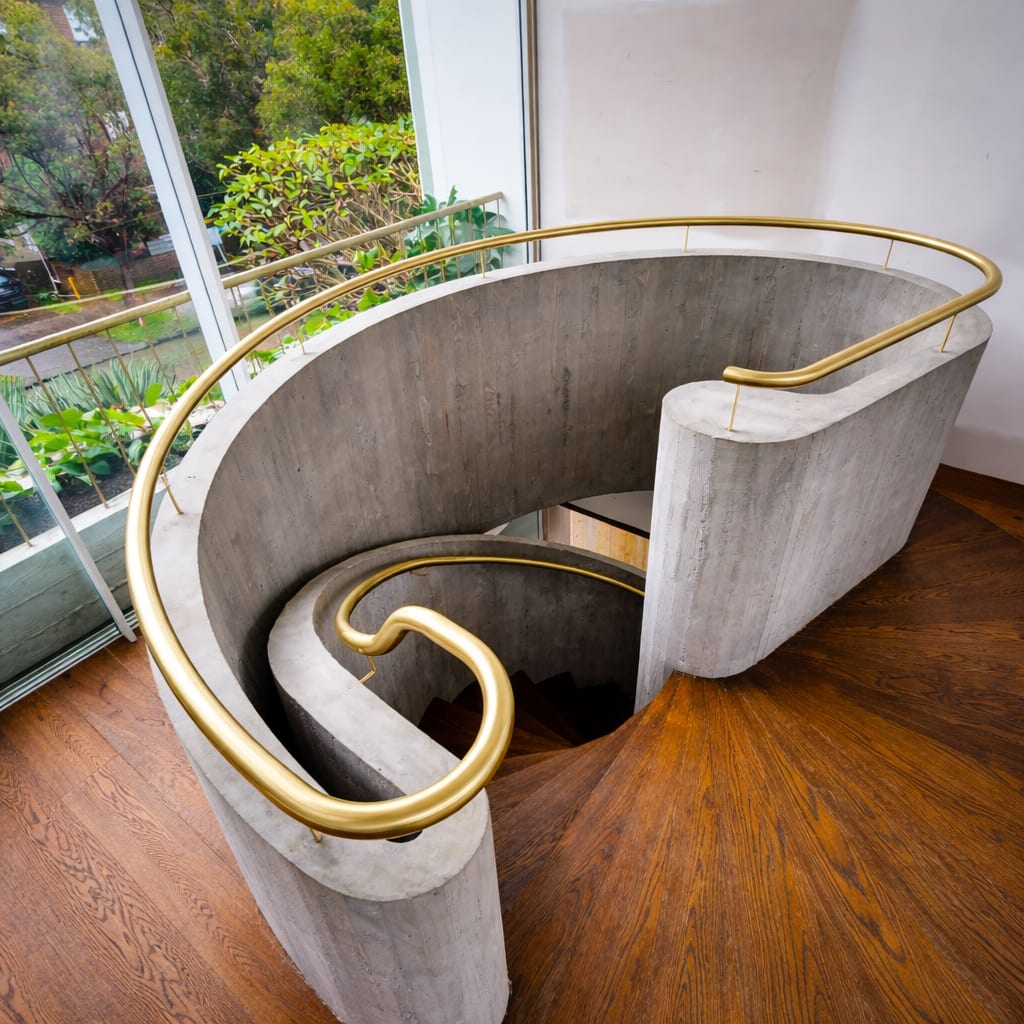
Caring for lacquered brass and copper
Warm water, a drop of mild dish soap, and a soft cloth. Dry immediately. That is all.
Never use metal polish, abrasive cream, solvents, methylated spirits or acidic cleaners on a lacquered surface — they cut through the coating and produce patchy dullness that cannot be spot-repaired. When a lacquer eventually fails, the correct fix is to strip it completely and re-lacquer, which we do on site for handrails and in the workshop for removable components.
Expect a good-quality lacquer on interior brass to last five to fifteen years depending on traffic. On a handrail that is gripped hundreds of times a day, it will be at the short end of that range.
Caring for unlacquered brass, copper and bronze
Weekly, wipe with a soft dry cloth. If the surface is greasy, use warm soapy water and dry thoroughly. Moisture left sitting is what causes uneven, blotchy patina.
Every few months, apply a thin coat of microcrystalline wax — the same conservation-grade wax used on museum bronzes — and buff it off. This slows oxidation, evens out the patina, and gives fingerprints something to sit on other than bare metal.
If you want to brighten the metal back, a proprietary brass or copper polish will do it, or a traditional paste of lemon juice and salt, or vinegar and bicarbonate of soda. Work in small sections, rinse thoroughly with clean water, and dry completely — any acid residue left on the surface will keep working and produce streaks. Then re-wax.
If you want the metal to darken, simply stop polishing. Copper moves from rose to amber to chocolate over roughly one to three years indoors, faster in a humid or coastal setting.
Copper bar tops specifically
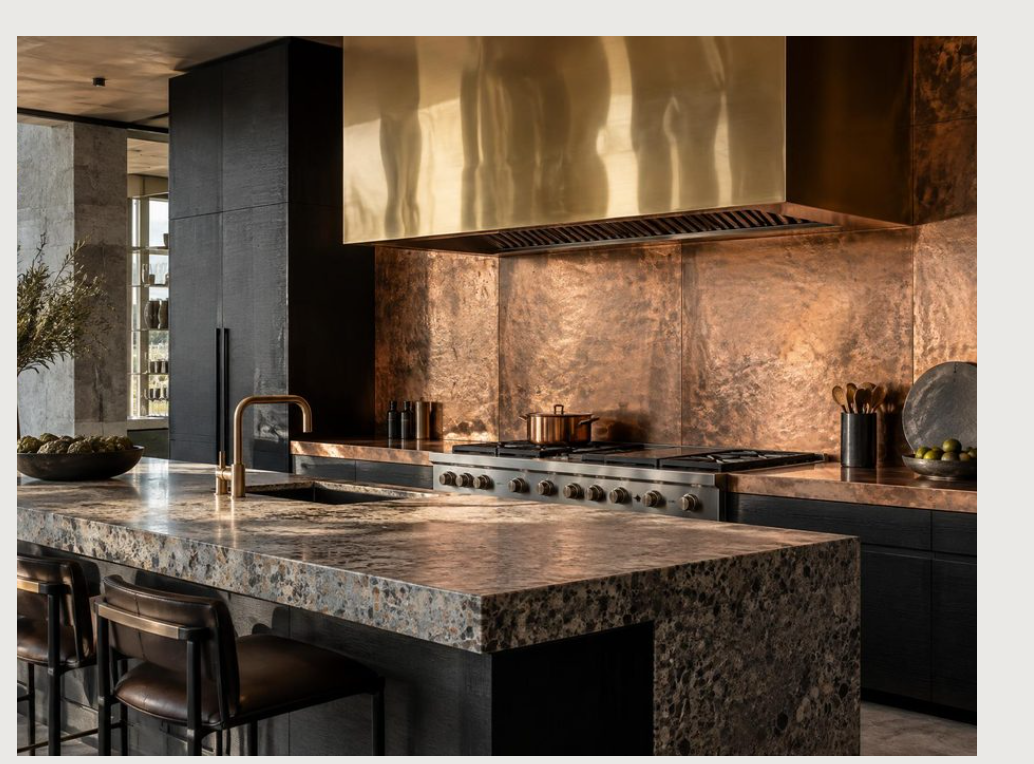
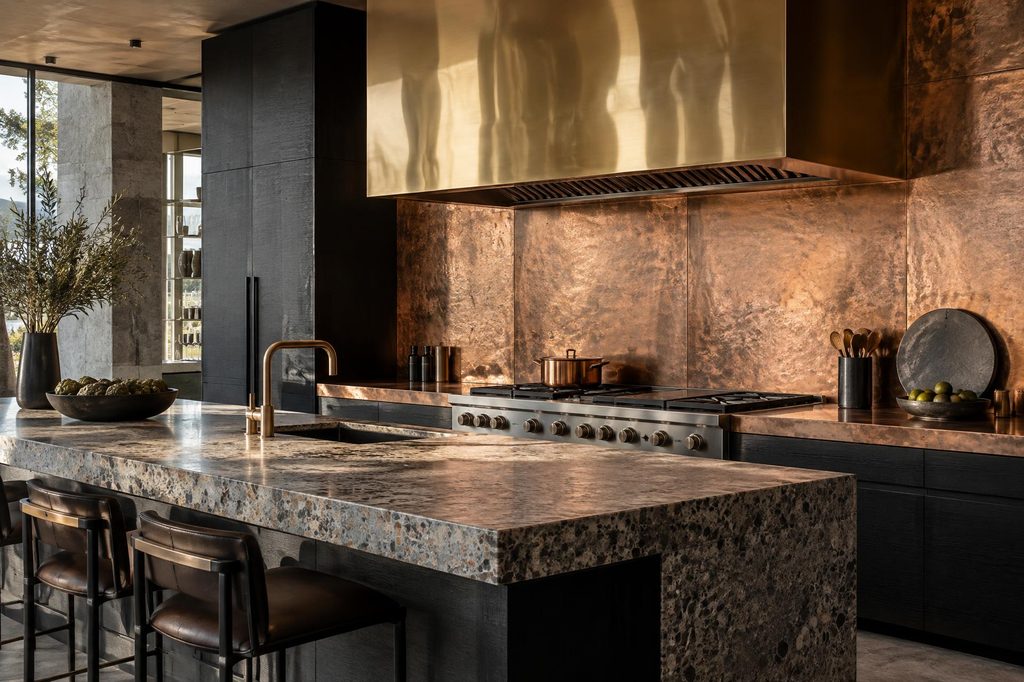
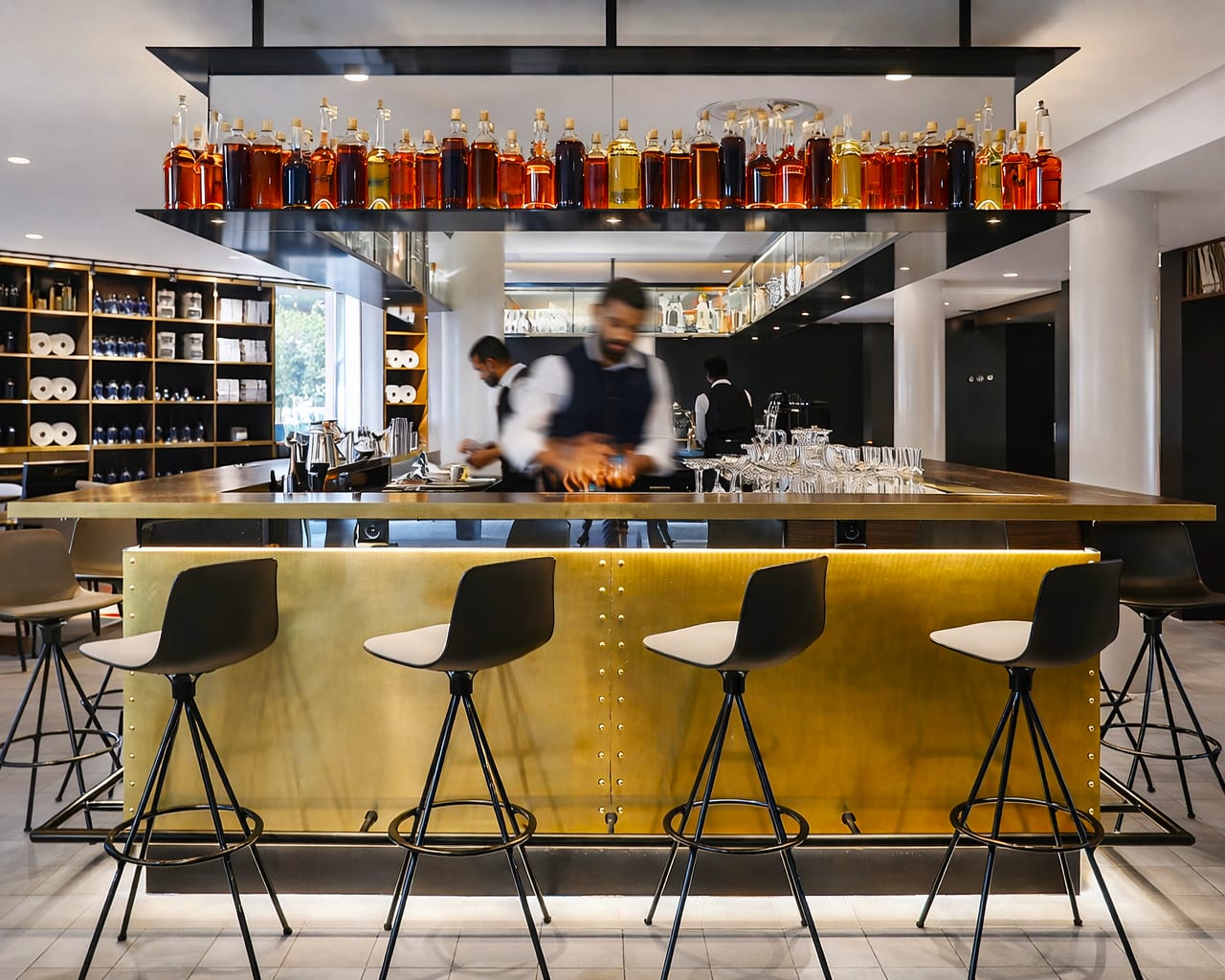
Bar tops take the most abuse of any copper surface: citrus, wine, spirits and constant hand contact. Every one of those leaves a mark, and on an unsealed bar that mottled history is exactly the point — it is why copper is specified for bars in the first place.
Wipe the bar down and dry it at the end of service, wax it monthly, and resist the urge to polish out individual marks. Spot-polishing creates bright patches that take months to blend back in. If a bar needs resetting, strip and re-patinate the whole surface at once.
Never use these
Steel wool, wire brushes or scouring pads — they gouge soft metals and leave carbon steel particles that rust.
Bleach and chloride-based cleaners — they will corrode copper alloys and leave permanent staining.
Ammonia on brass under any load — ammonia causes stress-corrosion cracking in brass, a genuine structural risk on handrails and fixings, not just a cosmetic one.
Dishwashers, for any removable brass or copper component.
Outdoor and coastal installations
Externally, copper and bronze will patinate to green-blue verdigris over a period of years, which is stable and protective — it is not a fault. Brass exposed to salt air can suffer dezincification, where zinc leaches out and leaves a weak, pinkish, porous surface. For external work near the coast we specify silicon bronze or marine-grade alloys rather than standard brass, and detail fixings to avoid galvanic contact between dissimilar metals.
Rinse external metalwork with fresh water periodically. Avoid pressure washing patinated surfaces.
When to call us
Call if a lacquer has failed and needs stripping and re-coating, if a handrail joint has loosened, if you want an existing installation re-patinated to a different tone, or if you are matching new metalwork to existing finishes on a renovation — something we do regularly.
Related services
See our copper and brass fabrication, balustrades and handrails and architectural metalwork services, or browse our portfolio for completed brass and copper installations.
Call 02 4226 5500 or submit a quote request to discuss a project.
Published by AMSS Group — The region’s leading metal fabrication specialists.