Architectural Metal Work in Wollongong: Finish, Detailing and Long-Term Performance
Architects, builders and developers rarely judge architectural metal work on the metal itself. They judge it on the joint where it meets stone, the consistency of the grain across a six-metre run, and whether the piece still looks considered after five winters of coastal air. Those outcomes are decided long before installation — in grade selection, templating, welding technique and finishing. AMSS Group has delivered metal fabrication in Wollongong and across the Illawarra since 1988, and this article sets out what actually separates architectural fabrications that hold their value from those that do not.
Why Local Fabrication Matters
Architectural metal supplies are only half the equation. The other half is proximity. Our Unanderra workshop sits minutes from most Illawarra sites, which means we can template on site, return to the shop, fabricate, and re-check a physical fit before a finish is ever applied. Interstate suppliers work from drawings alone — and drawings never account for the 8 mm the slab actually moved, the wall that is out of plumb, or the stone that arrived 3 mm thicker than the schedule. Local metal fabrication in Wollongong removes those risks and compresses lead times when programmes tighten.
Visual Finish: The First Thing Anyone Notices
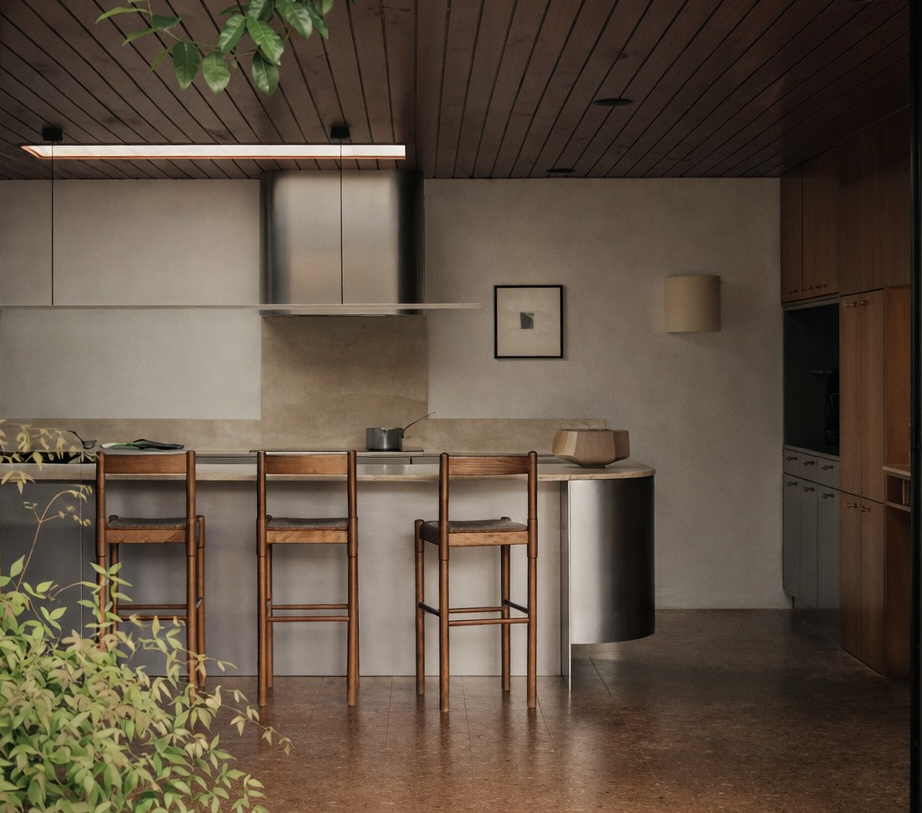
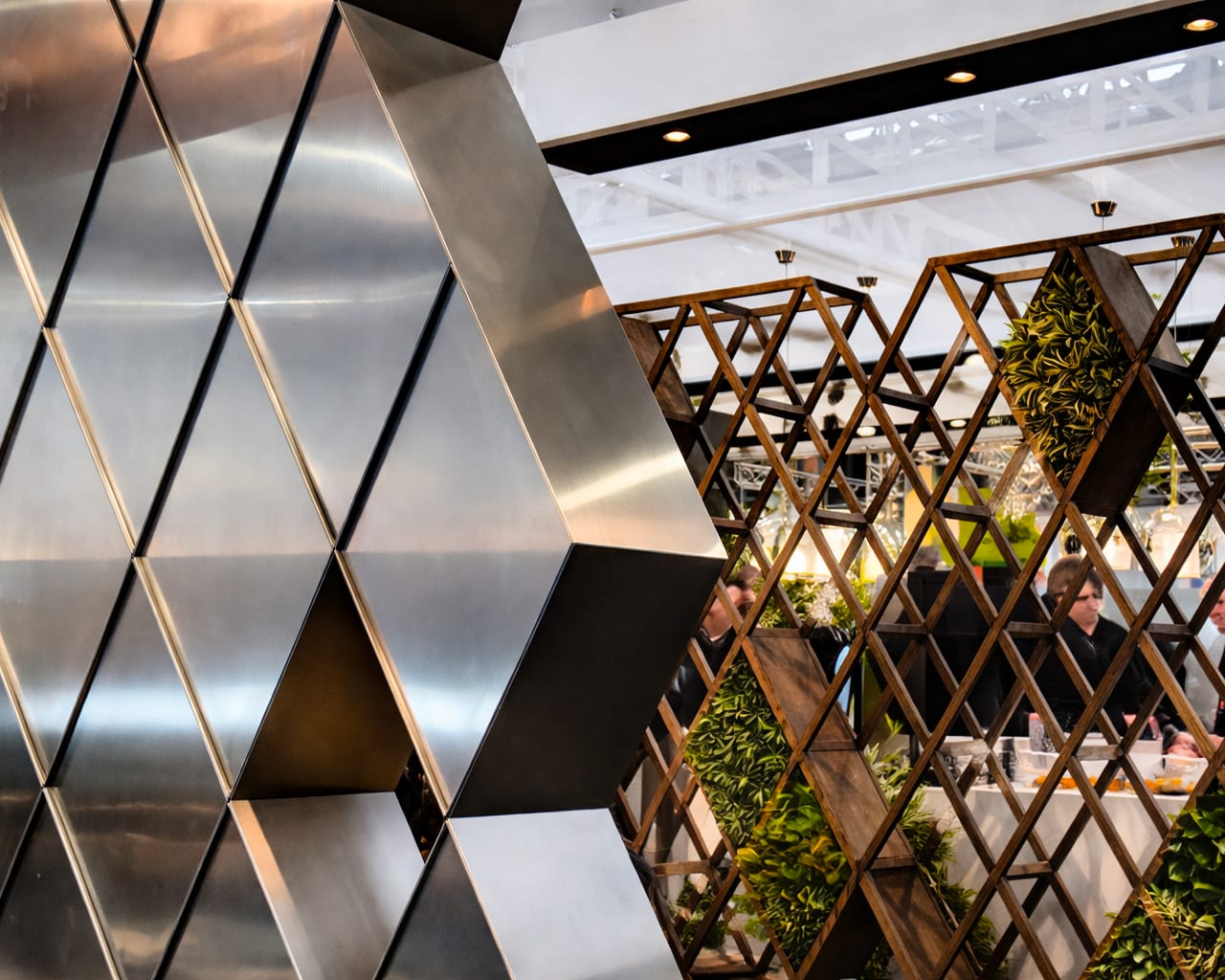
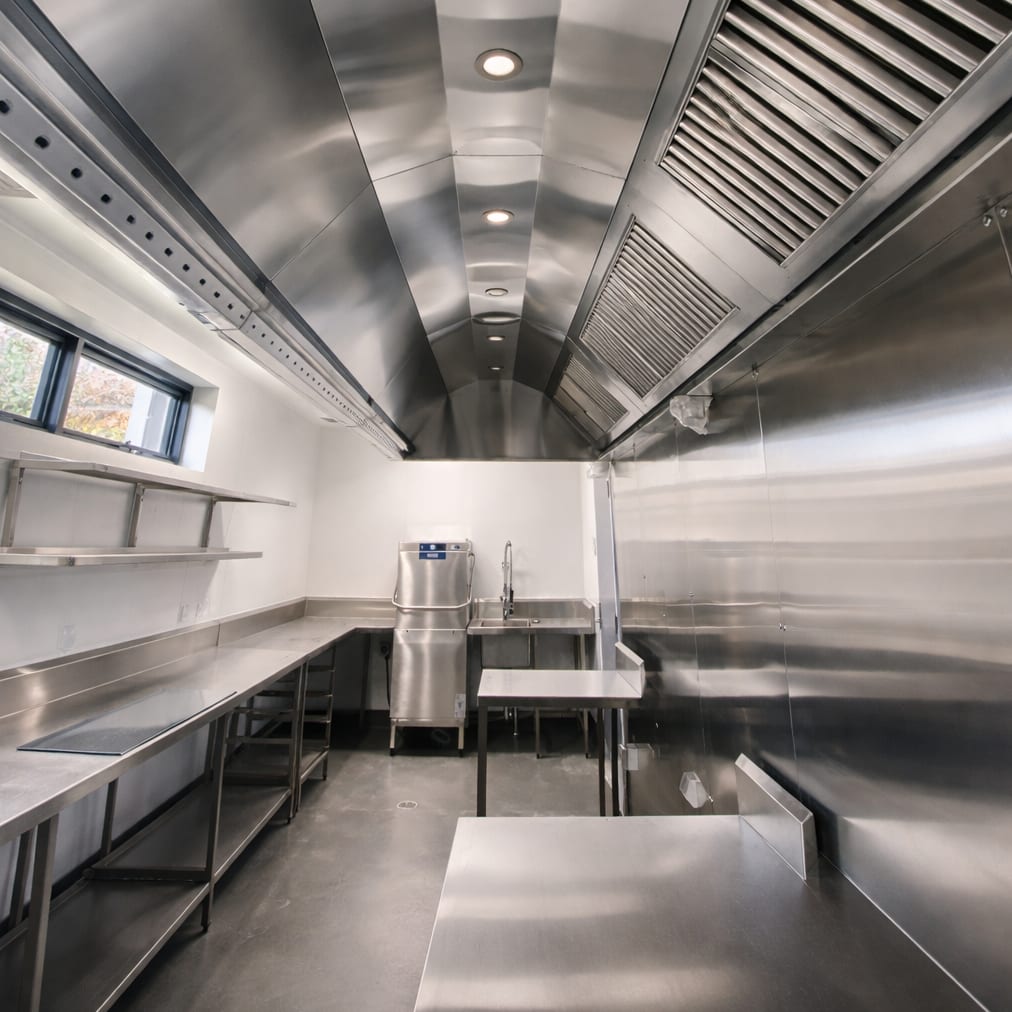
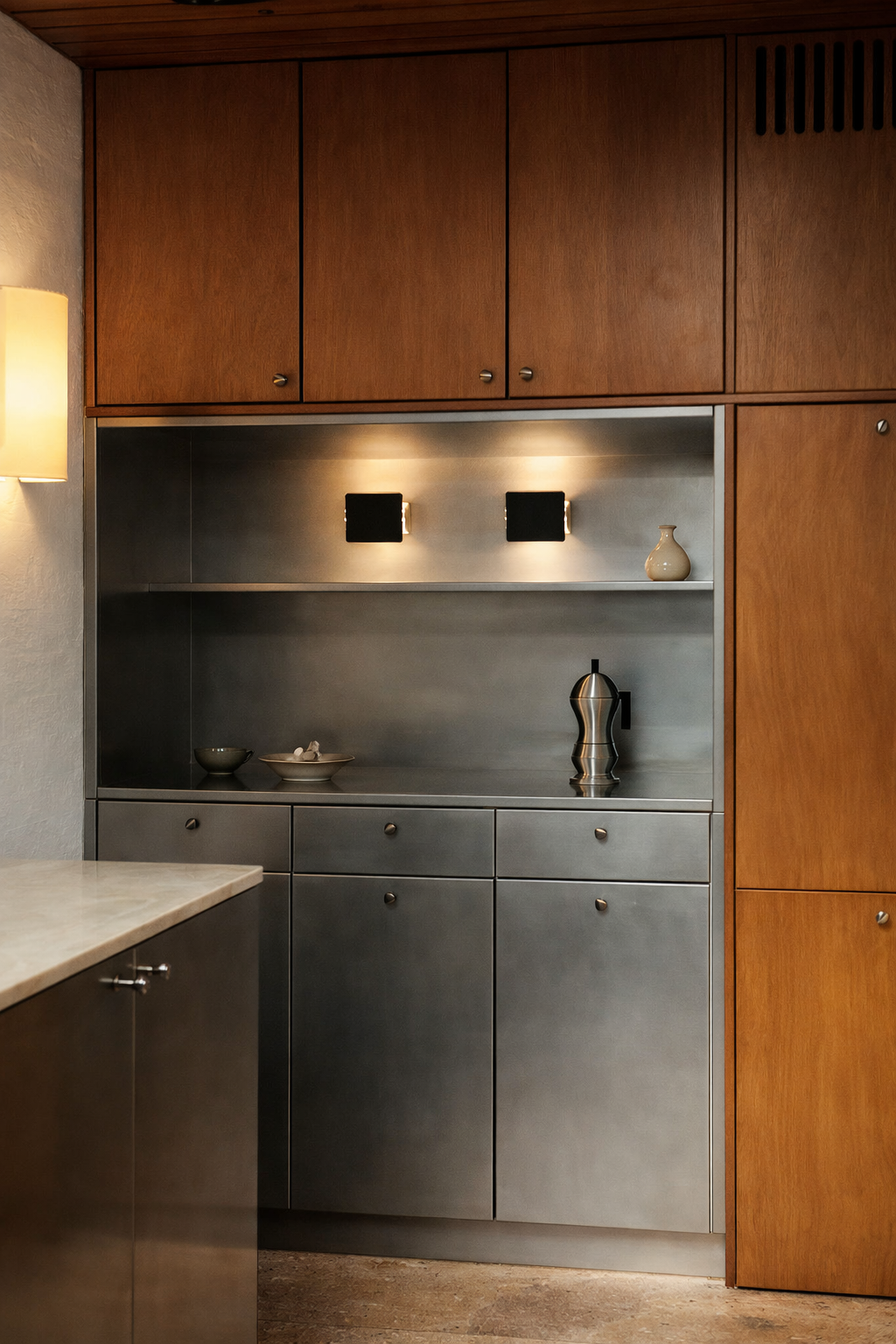
Finish is where architectural metal work either reads as bespoke or as generic. Stainless steel alone offers a wide range: No. 4 brushed satin, matt bead-blast, dull polish, mirror, and directional hairline. Each behaves differently under light. Mirror amplifies every reflection and every imperfection in the substrate behind it, so it demands heavier gauge material and rigid backing. Matt and bead-blast finishes absorb light, hide fingerprints and suit high-touch surfaces such as benchtops, handrails and lift surrounds. Brushed satin sits between the two and remains the most specified finish in Australian architectural fabrications.
Grain direction is the detail most often overlooked. On a continuous run of panels, the grain must run the same way on every sheet, and adjoining components should be cut from the same coil where possible. Different coils carry subtle differences in tone that only appear once the panels are installed side by side under building lighting. We sequence and label sheets at cutting so the run stays consistent from the first panel to the last.
Durability and Grade Selection
Wollongong sits within a marine environment. Salt-laden air travels several kilometres inland, and it does not respect the grade written on a schedule. Grade 304 stainless steel performs well for interior applications — kitchens, joinery inserts, feature walls, internal balustrades — where it is cleaned regularly and is not exposed to chlorides. Grade 316 stainless steel contains molybdenum, which markedly improves resistance to pitting and crevice corrosion, and it is the correct specification for anything external, coastal, near a pool, or in a wash-down environment. Our 304 vs 316 guide covers the comparison in detail.
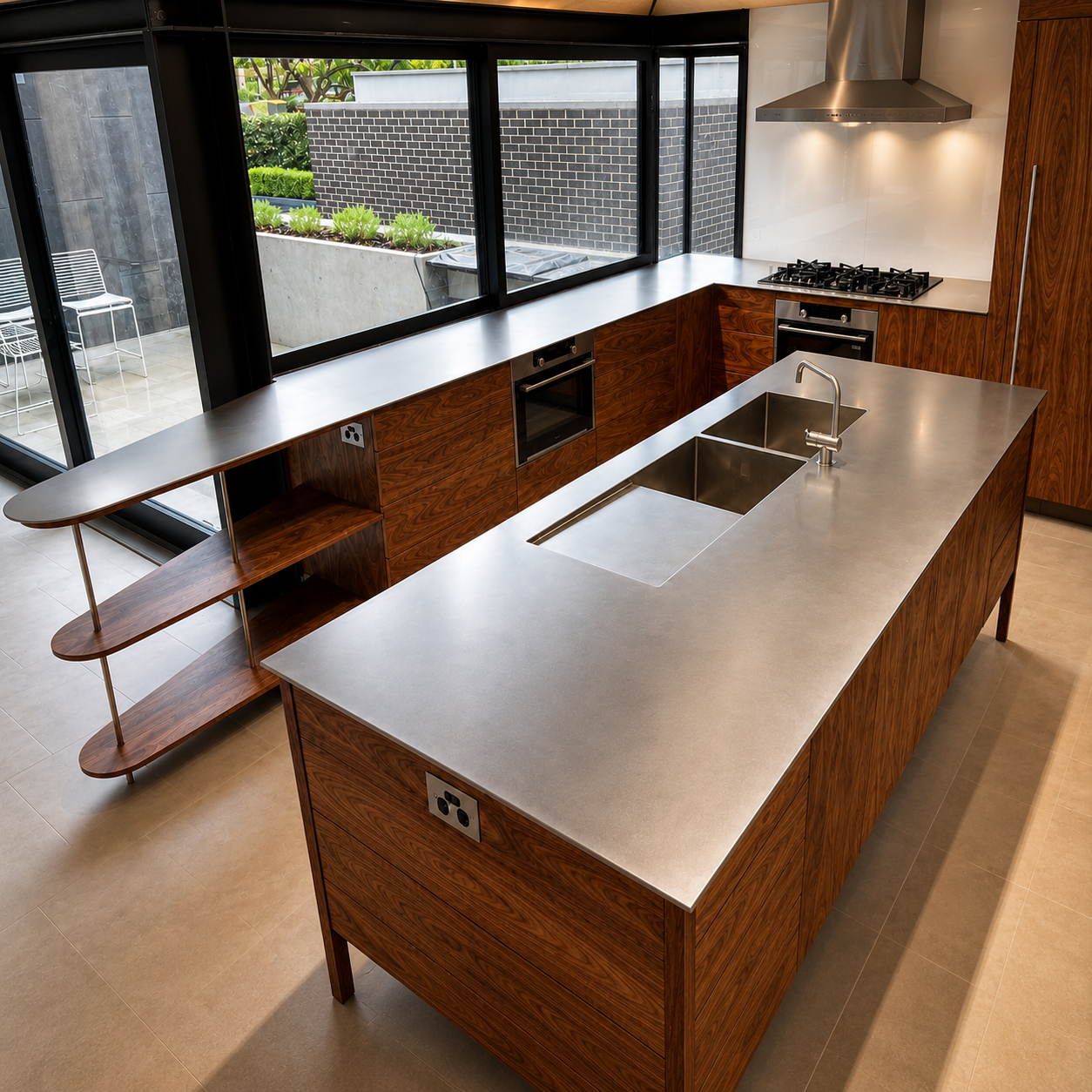
Gauge matters as much as grade. A 0.9 mm panel will oil-can across a wide unsupported span; 1.5 mm to 2 mm with folded returns and internal stiffeners stays flat. Benchtop edges are folded and welded to a 40 mm profile rather than glued to a substrate, which prevents delamination and lets the surface be re-finished decades later rather than replaced.
Integration with Stone, Timber, Glass and Concrete
Architectural metal work almost never exists in isolation. The junction between materials is where projects succeed or fail, and each pairing brings its own problem to solve.
Clean Detailing
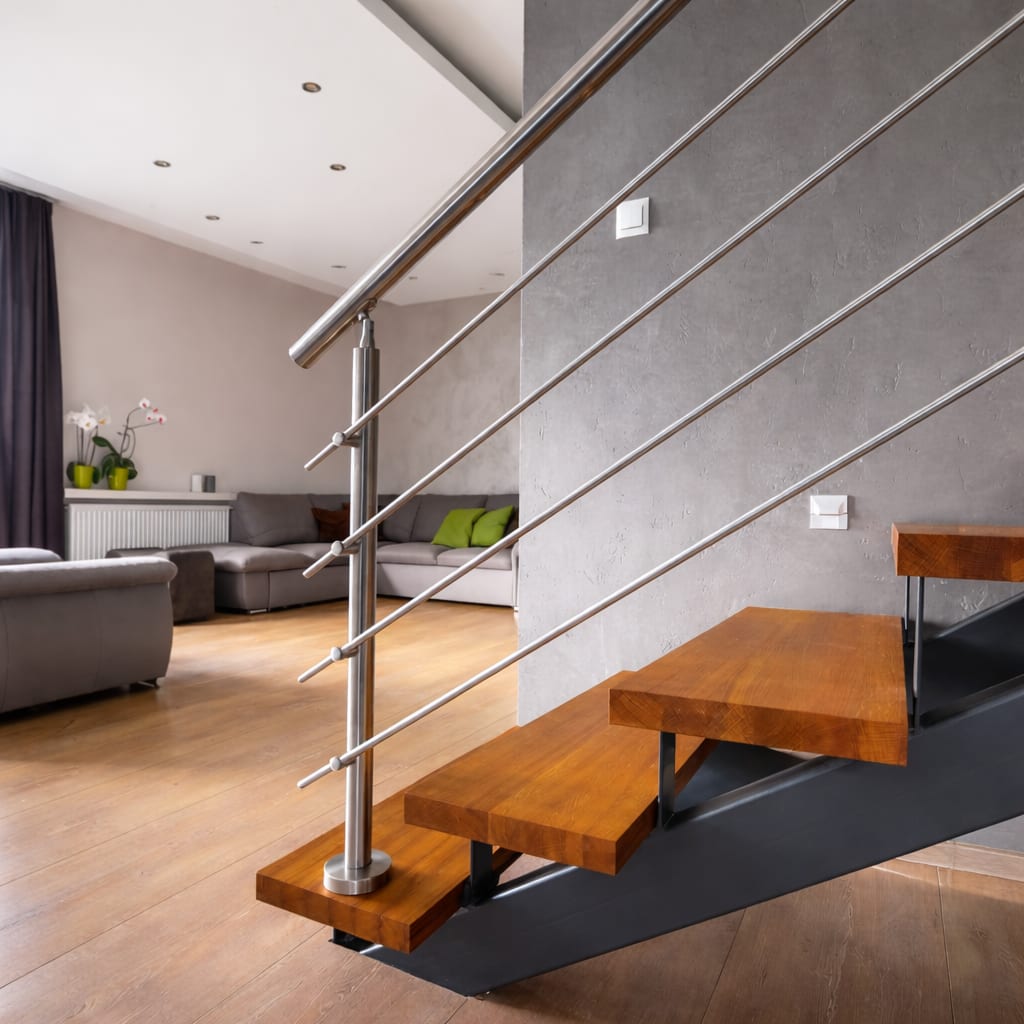
Clean detailing is the quiet signature of good architectural fabrications. It means welds fully dressed and blended so the seam disappears into the grain, not a bead of filler sanded flat and hoping the finish covers it. It means mitred corners with tight, consistent radii instead of applied trims. It means concealed fixings — hidden cleats, keyhole plates, tapped bosses welded behind the face — so no fastener head interrupts a surface the architect spent months resolving.
It also means the underside is finished. On a benchtop or a soffit panel, the parts nobody photographs are the parts that reveal whether the fabricator was building to a standard or building to a price. Deburred edges, sealed penetrations and cleanly folded returns are safety and hygiene requirements as much as aesthetic ones.
Custom Measurements: Why Standard Sizes Fail
No building is built to the drawing. Openings vary, walls bow, floors fall, and other trades take up more space than the coordination model suggested. Standard-size architectural metal supplies force the site to accommodate the product — which usually means packers, scribes and silicone doing work they should not be doing.
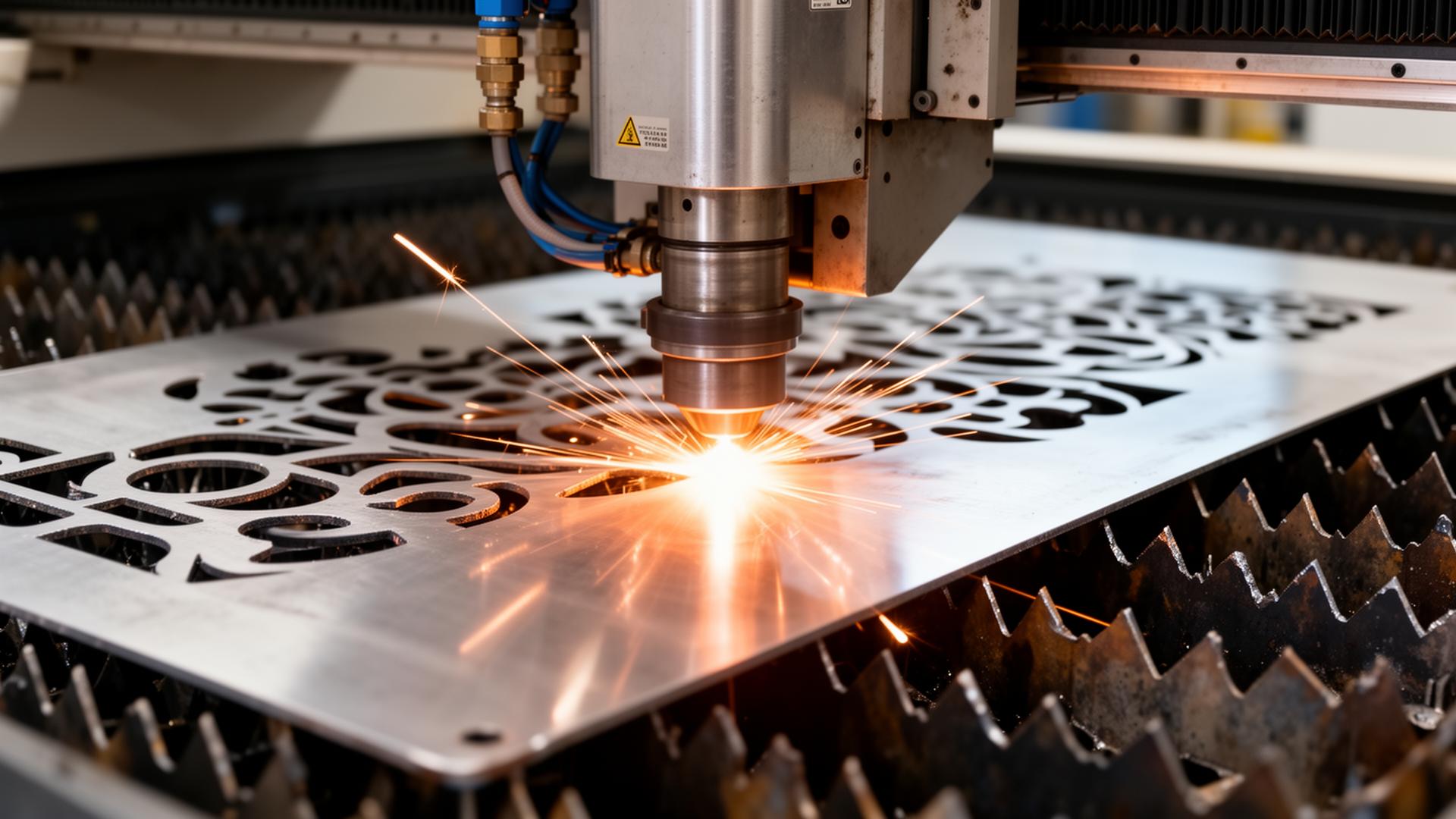
Our process runs the other way. We template on site with physical templates or laser measurement, transfer that data into CAD, and cut to the building as it actually exists. Tolerances are managed deliberately: tighter where a joint is visible, more generous where a component is concealed and needs adjustment. Where a run is long or the sequence is complex — a three-level handrail, a continuous facade band — we dry-fit in the workshop before finishing so any adjustment happens where it is cheap, not on scaffolding at the eleventh hour.
Premium Finishes Beyond Stainless
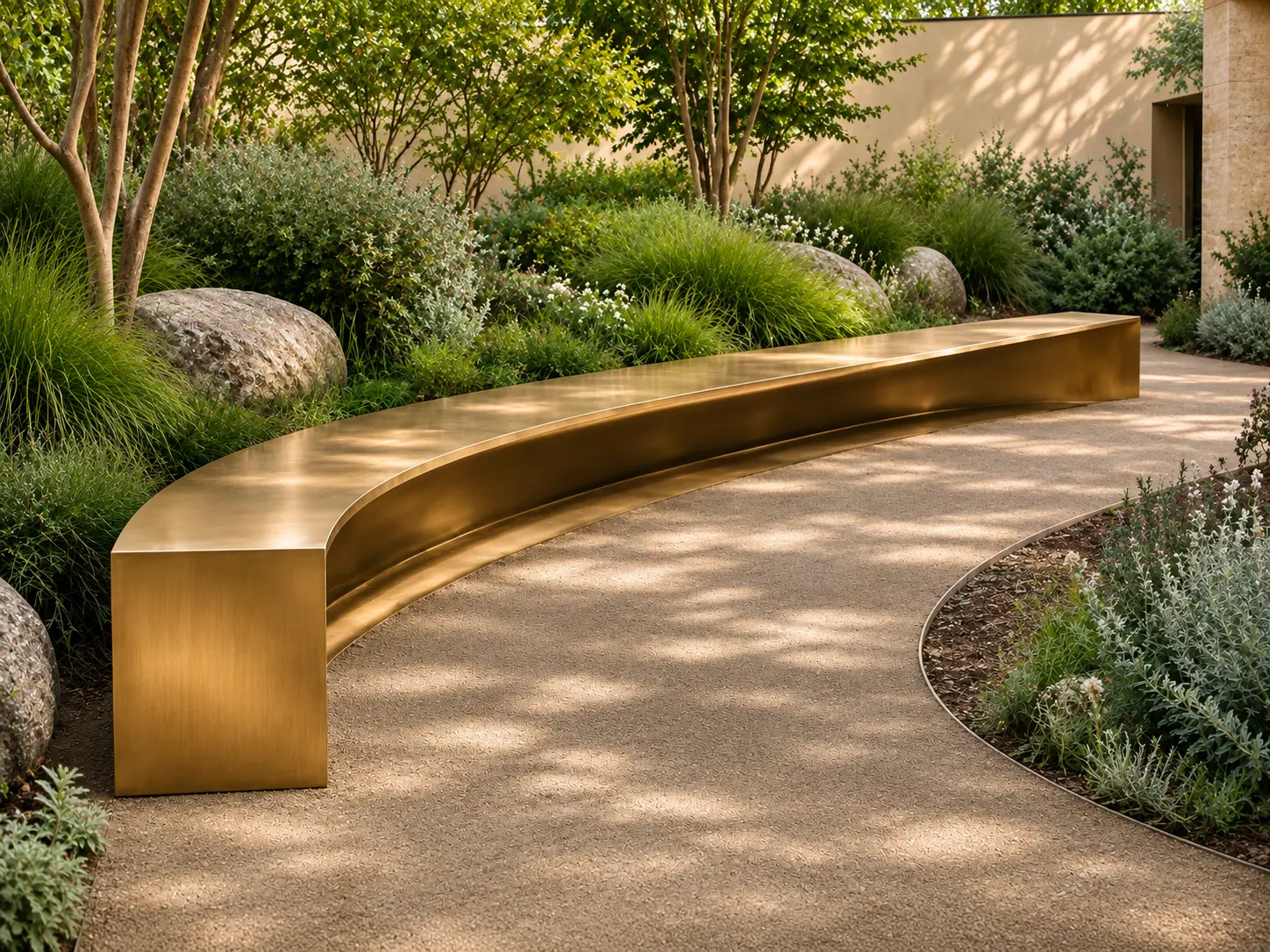
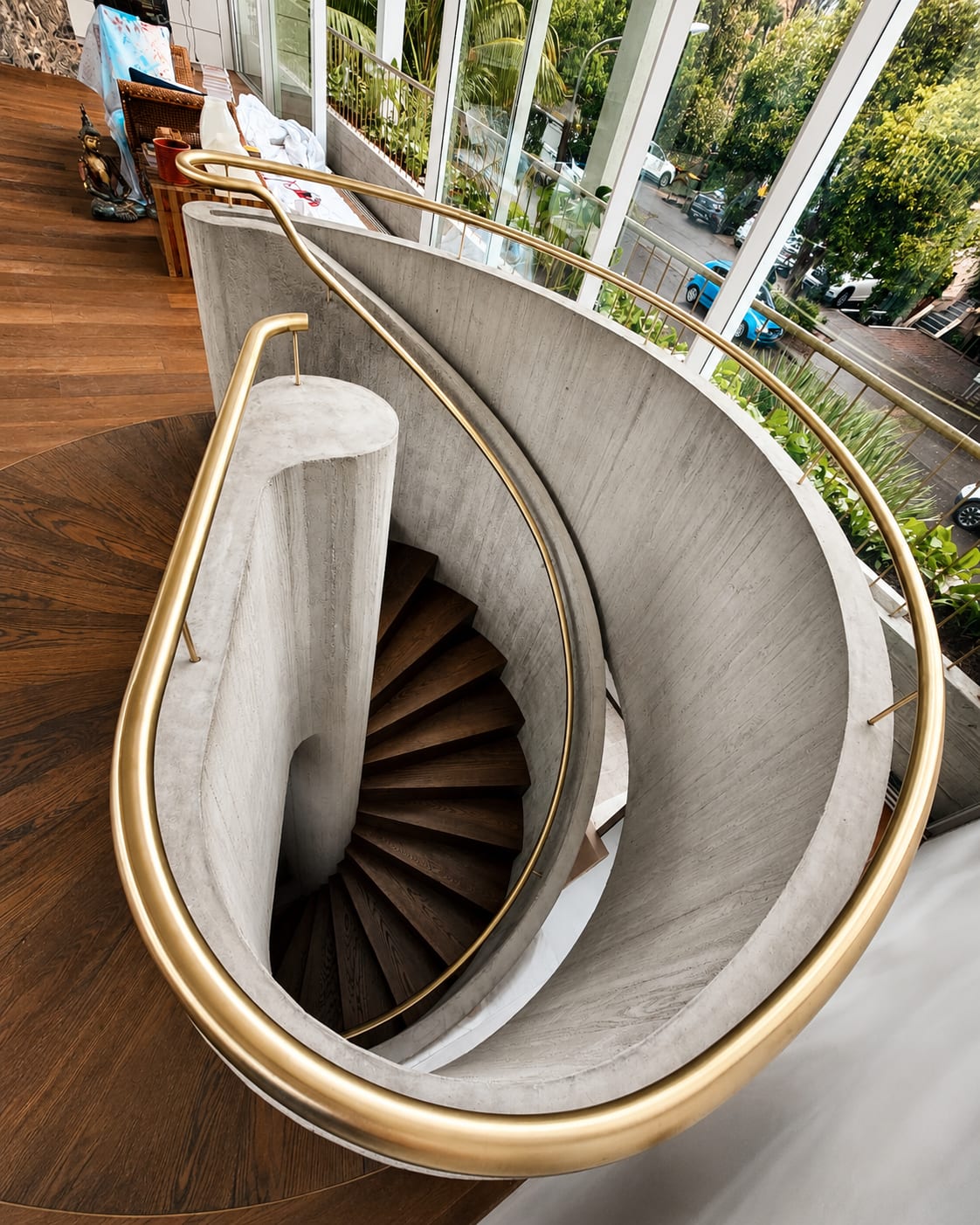
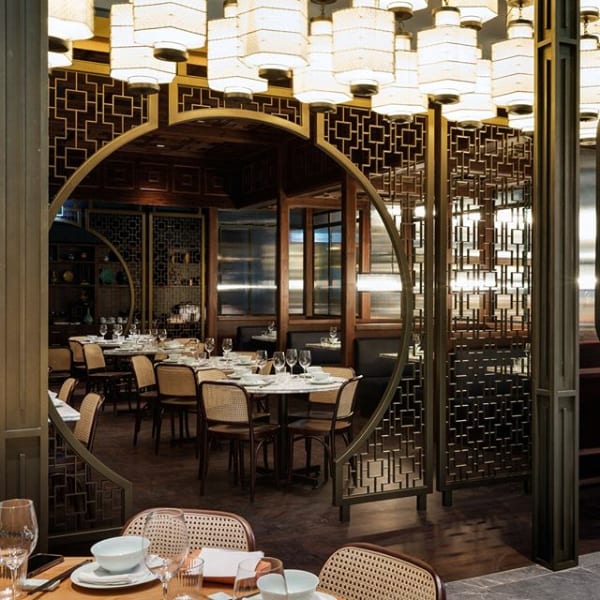
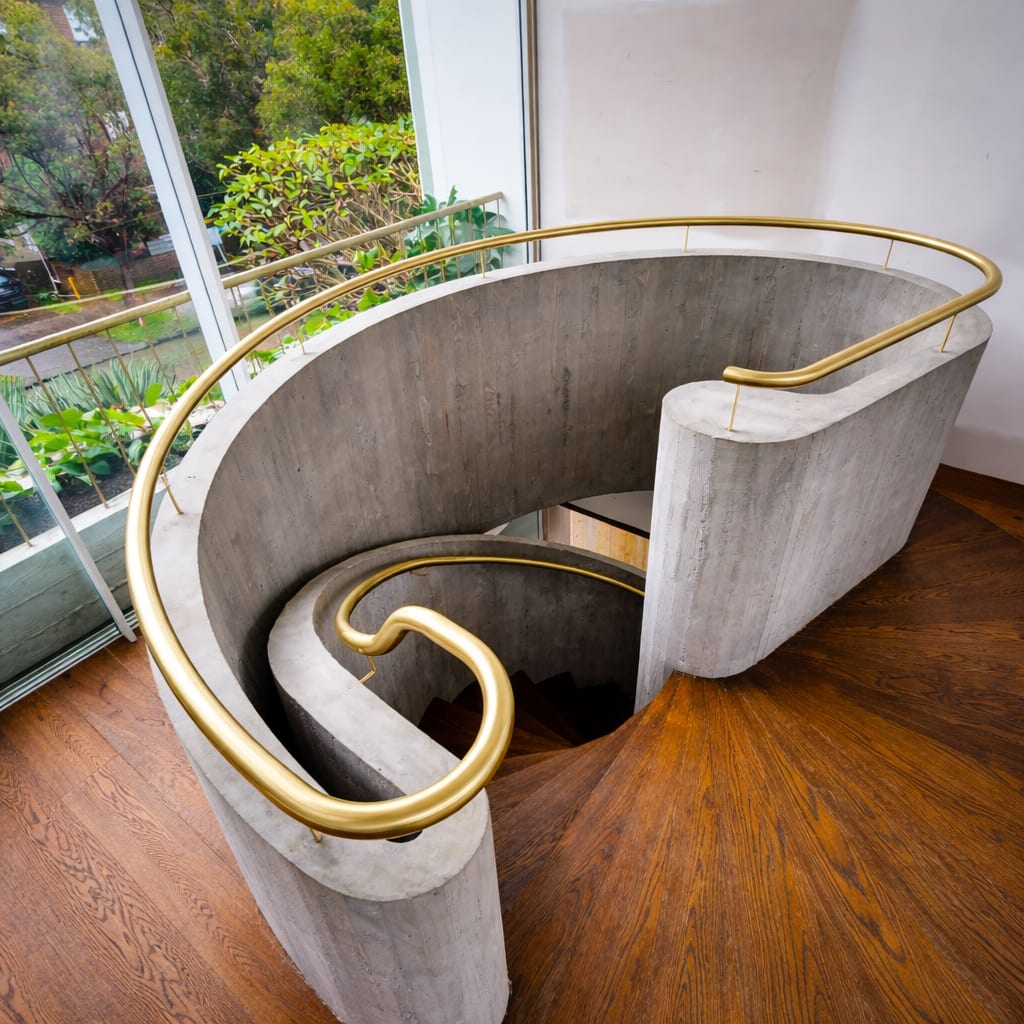
Stainless steel is the backbone of most architectural metal work, but it is not the only option. Polished brass brings warmth and develops a living patina unless lacquered. Copper moves from bright rose to deep brown and eventually verdigris, and is well suited to bar tops and feature cladding where that change is part of the design intent. Bronze offers depth and weight for hardware, thresholds and joinery inserts. Blackened and chemically patinated finishes deliver a matt, non-reflective darkness that powder coating cannot replicate because it retains the metal's texture.
We provide physical samples on every project. A finish chosen from a photograph is a finish chosen twice, and specifiers deserve to see the material under the building's own lighting before it is signed off.
Long-Term Performance
The strongest argument for architectural metal work is its life span. Stainless steel benchtops and balustrades installed by our team in the 1990s remain in service today. That performance depends on three things.
First, correct grade and detailing — no crevices where chlorides can concentrate, no carbon steel contamination from shared tooling, and passivation after welding to restore the chromium oxide layer.
Second, realistic maintenance. Warm water, a soft cloth and a non-chloride cleaner wiped along the grain is all most surfaces require. Steel wool, bleach and chloride-based products will damage the passive layer and cause the pitting people wrongly blame on the material.
Third, repairability. Metal can be re-finished. A scratched brushed panel can be blended back on site; a bench that has served twenty years can be re-grained rather than replaced. At end of life, stainless steel is fully recyclable with no loss of properties — a genuine advantage when a project is chasing Green Star or NABERS outcomes.
Working with AMSS Group
We work from architectural drawings, sketches or a conversation on site. Most projects begin with a site measure and material samples, move to shop drawings for approval, and finish with fabrication and installation by our own team rather than subcontracted labour. You can see completed examples across our portfolio, or read more about our architectural metalwork and stainless steel fabrication services.
To discuss architectural fabrications for a residential, commercial or institutional project, call 02 4226 5500 or submit a quote request. We service Wollongong, the Illawarra, the South Coast, Sydney and Newcastle, and deliver Australia-wide for larger architectural packages.
Published by AMSS Group — The region’s leading metal fabrication specialists.